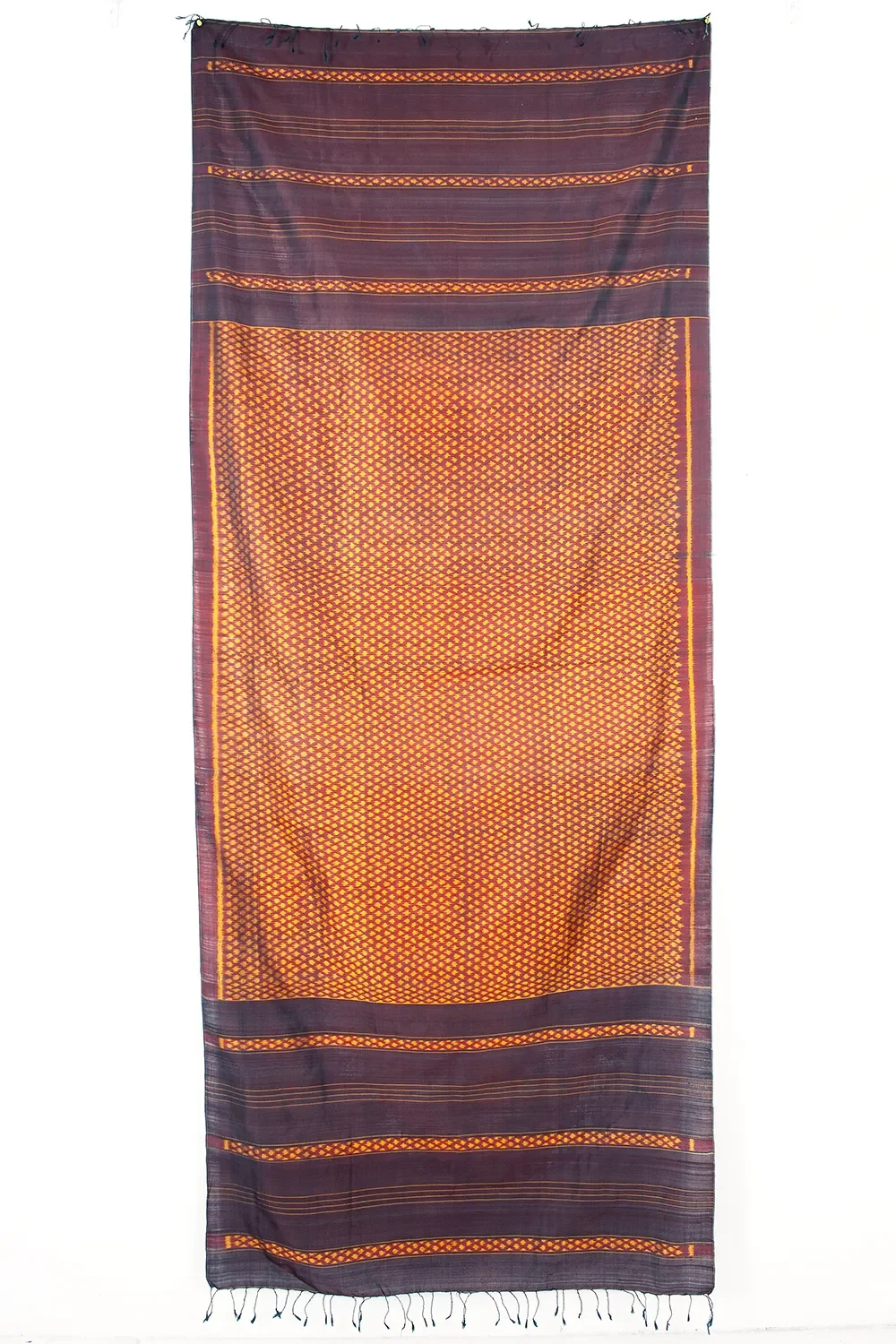
Ikat Silk Runner
Maroon and yellow/orange
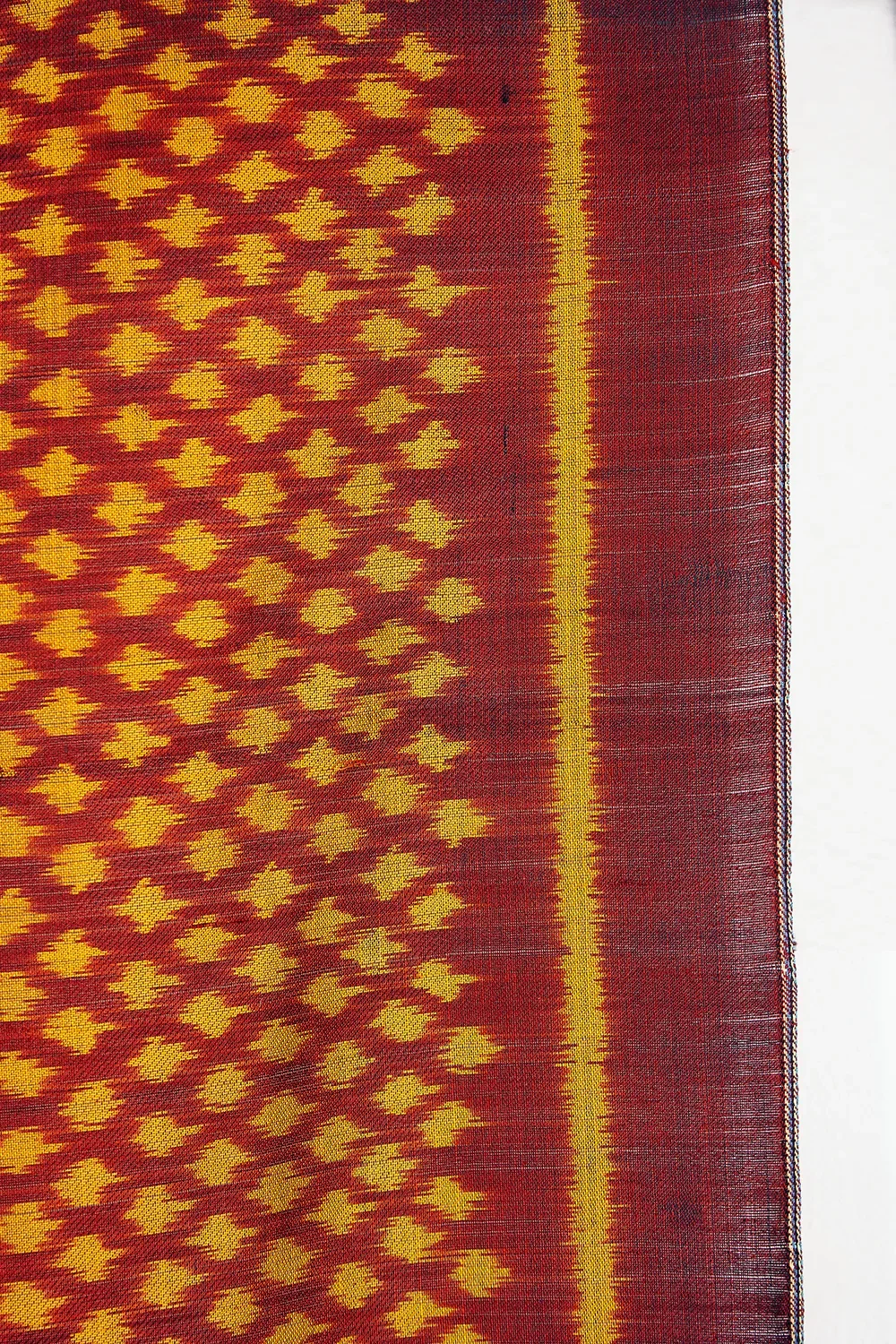
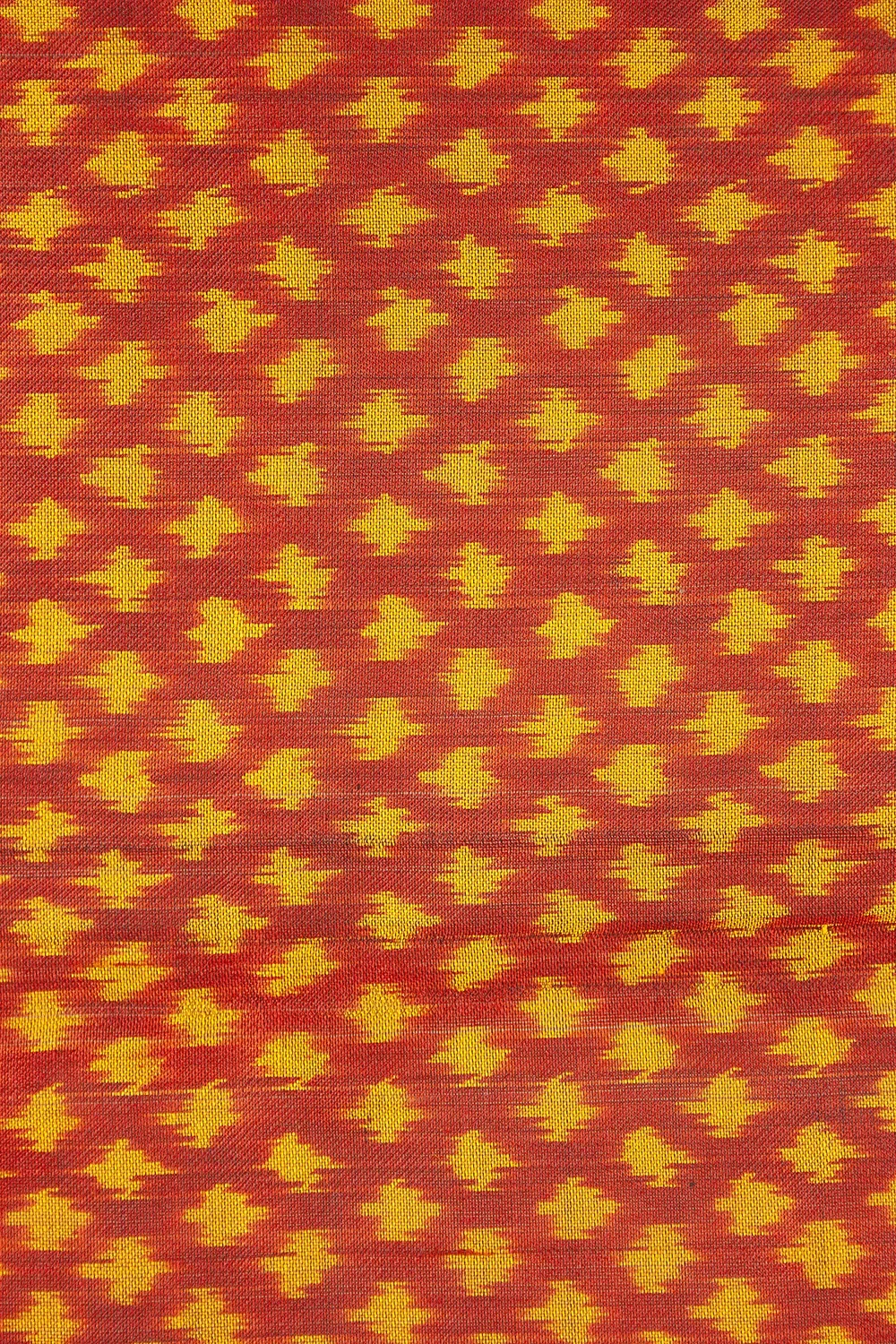
Cambodian ikat, known locally as hôl (ហូល), is an extraordinary complex resist-dying method where patterns are “painted” onto threats before weaving.
The distinctive feature of Cambodian ikat is that the weft threads are tied and resist-dyed before they are woven. The weaver repeatedly binds portions of the silk threads, dyes them, re-binds them for subsequent colors, and then weaves them into the cloth. This creates the characteristic slightly shifting or softened edges of ikat patterns. In Khmer, the technique is known as chong kiet, while the resulting patterned silk is commonly called hol.
Dating back to the Angkor Empire, this complex technique uses natural golden silk and botanical dyes, with high-end pieces can take up to a year to craft. Though nearly wiped out by the Khmer Rouge, dedicated conservation projects have revived this breathtaking craft.
-
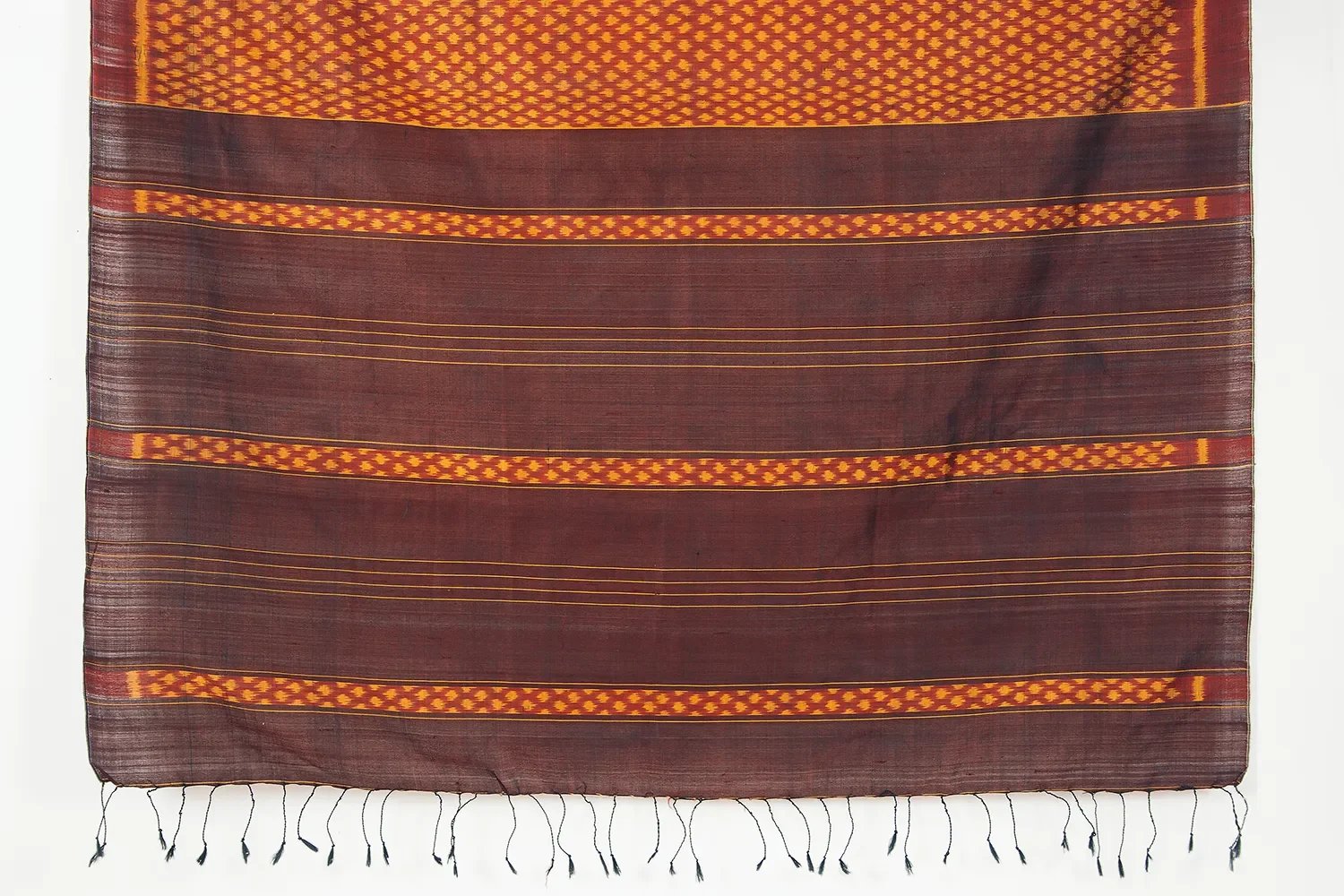
The long rectangular format and fringed ends are characteristic of a textile intended for draping or wearing. Cambodian hol silk was traditionally used for sampot, the wrapped lower-body garment, particularly for formal and special occasions.
Characteristics of Cambodian Ikat
Weft Ikat: Unlike warp ikat, only the weft (horizontal) threads are tied and dyed. The pattern reveals itself entirely only as the fabric is woven.
Uneven Twill Weave: It is woven on multi-shaft looms, resulting in a distinct texture where the colored weft threads dominate the front of the cloth, making it highly reversible.
Natural Pigments: Traditional artisans use plant- and insect-based dyes (such as indigo, lac insects, and tree bark) to achieve rich, earthy colors.
The Process
Pre-Planning from Memory: Patterns aren't drawn on paper; motifs (like celestial realms, fish, or flora) are passed down orally and woven purely from the artisan's memory.
Resist Tying: Threads are stretched to the fabric's width. Artisans tightly bind sections with banana fibers or plastic ribbons to block dye penetration.
Repeated Dyeing: Bundles are dipped, dried, untied, and re-tied multiple times to build multi-colored complexity.
Title: Table Runner
Date: 2007
Geography: Phnom Penh, Cambodia
Medium: Silk
Dimensions: H. 92 in. W. 38 in.
Provenance: Cambodia
Inventory Number: CA.01