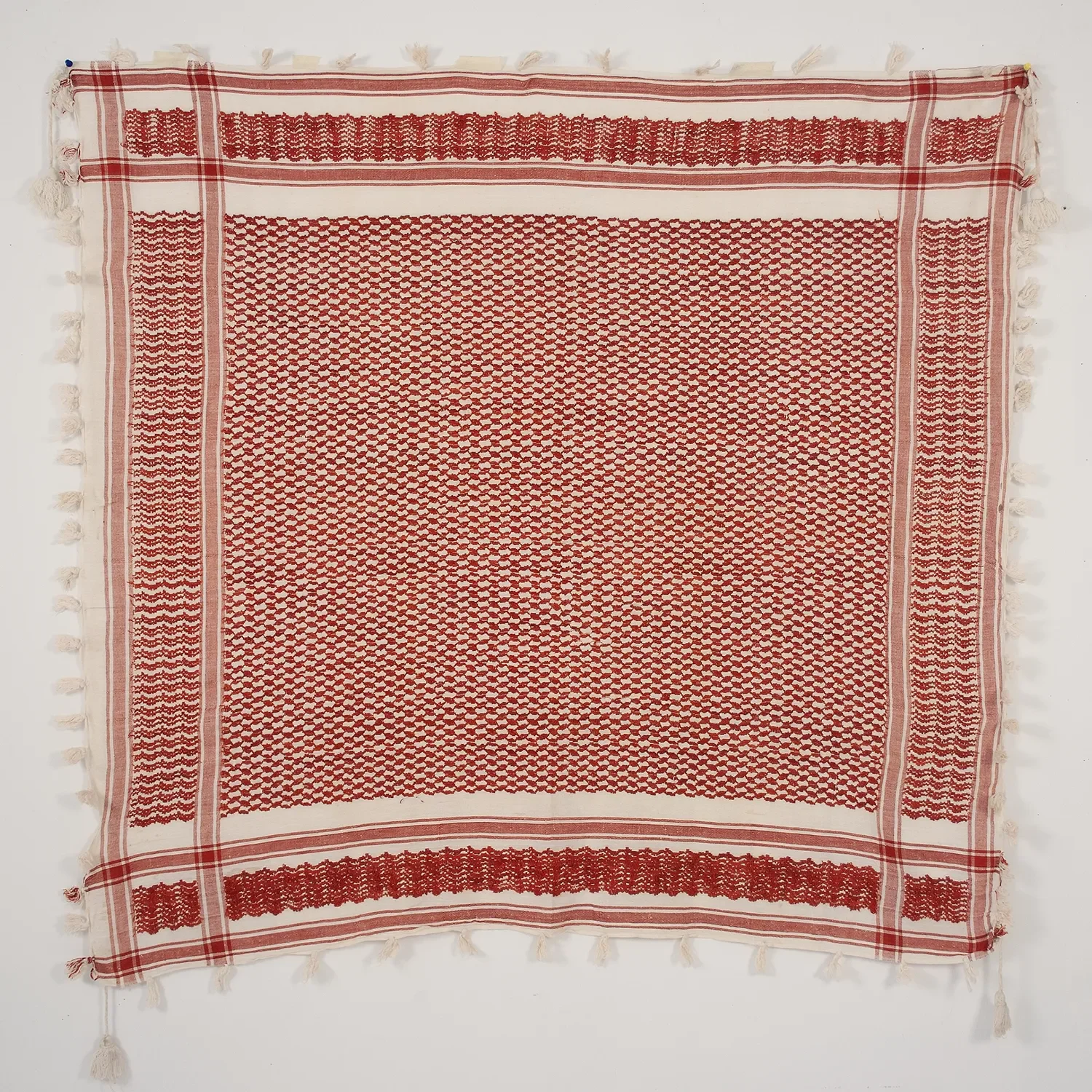
Keffiyeh
Egyptian men’s headscarf
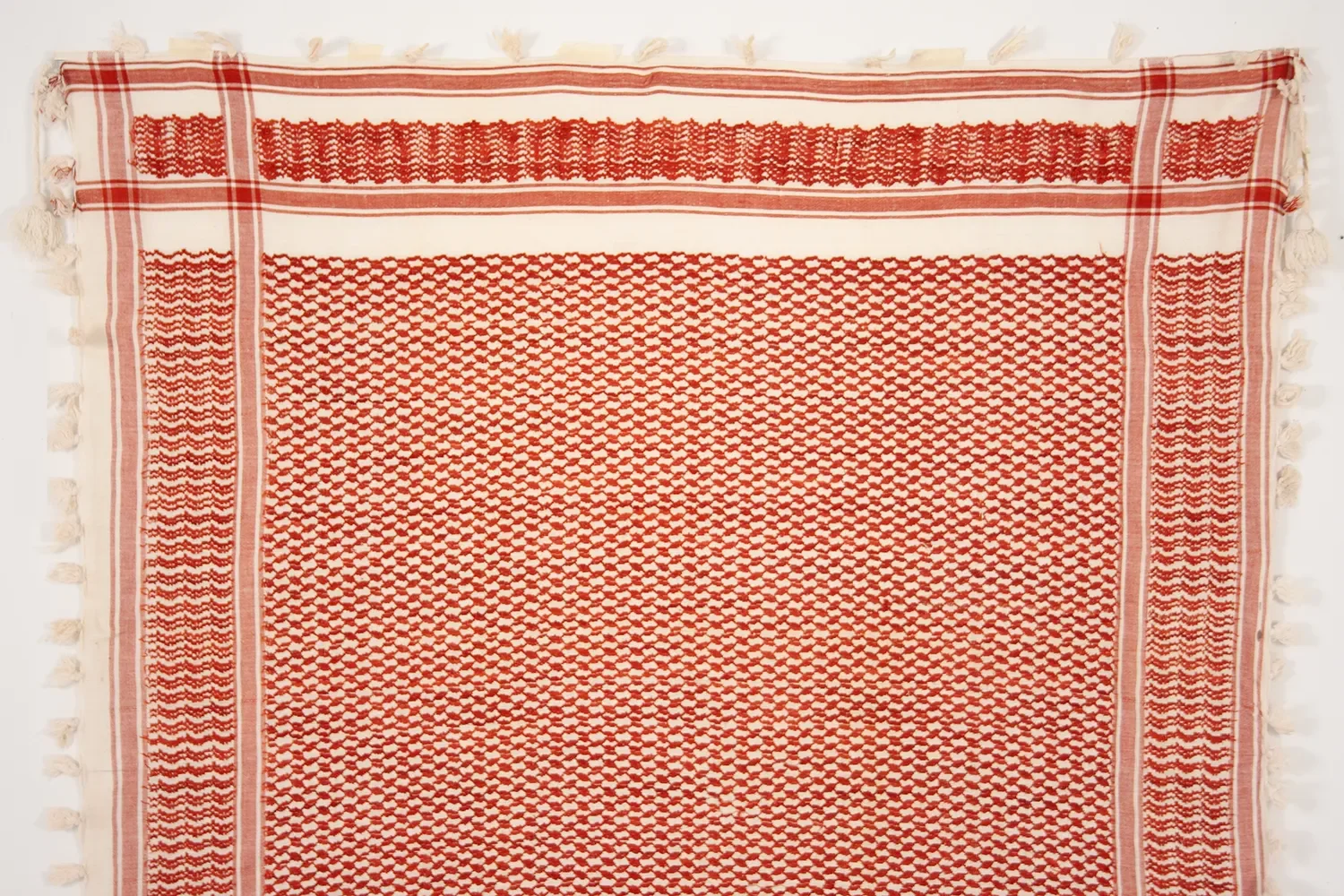
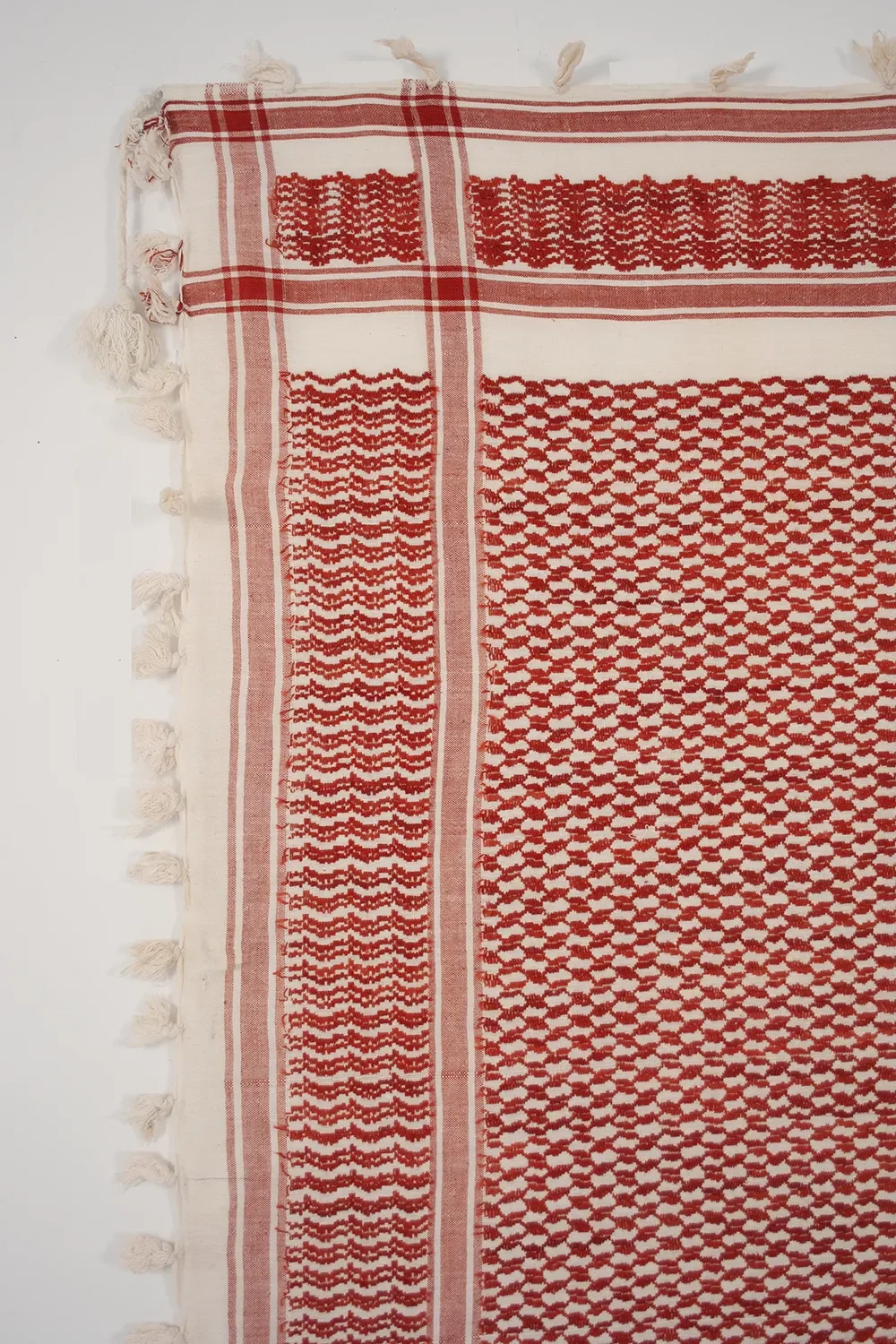
A large, square piece of cotton cloth, most commonly white, patterned with red or black, worn for protection against the sun, dust, and sand. It is finished with hand-tied and braided cotton fringe.
The red and white design is deeply connected to Bedouin heritage, representing honor, courage, and regional identity, originating from cultures across the Middle East.
-
While the keffiyeh's status as an icon of Palestinian nationhood is undisputed, its origins lie further east, in what is now Iraq. The word itself means "relating to Kufa," a reference to the Iraqi city south of Baghdad that sits along the Euphrates river, but little else is known about the roots of the keffiyeh.The modern black-and-white checkered keffiyeh rose to prominence as a symbol of Palestinian national identity and resistance during the 1936–1939 Arab revolt. Decades later. it has become a primary symbol of Palestinian nationalism, identity, and resistance
Hence, today, the keffiyeh's primary global connotation is political rather than purely utilitarian or historical. Left-leaning or anti-Zionist Jewish activists wear the keffiyeh to signal alignment with Palestinian human rights, peace movements, and opposition to Israeli occupation.
Wearing a keffiyeh is not inherently racist, but it is a deeply charged cultural and political symbol. Whether wearing it is viewed as respectful, appropriative, or offensive depends heavily on the wearer’s intent, context, and awareness of its history
Title: Keffiyeh
Date: 1977
Geography: Cairo, Egypt
Medium: Cotton, woven
Dimensions: H. 44 in. W. 47 in.
Provenance: Purchased in Cairo, Egypt
Inventory Number: EG.01