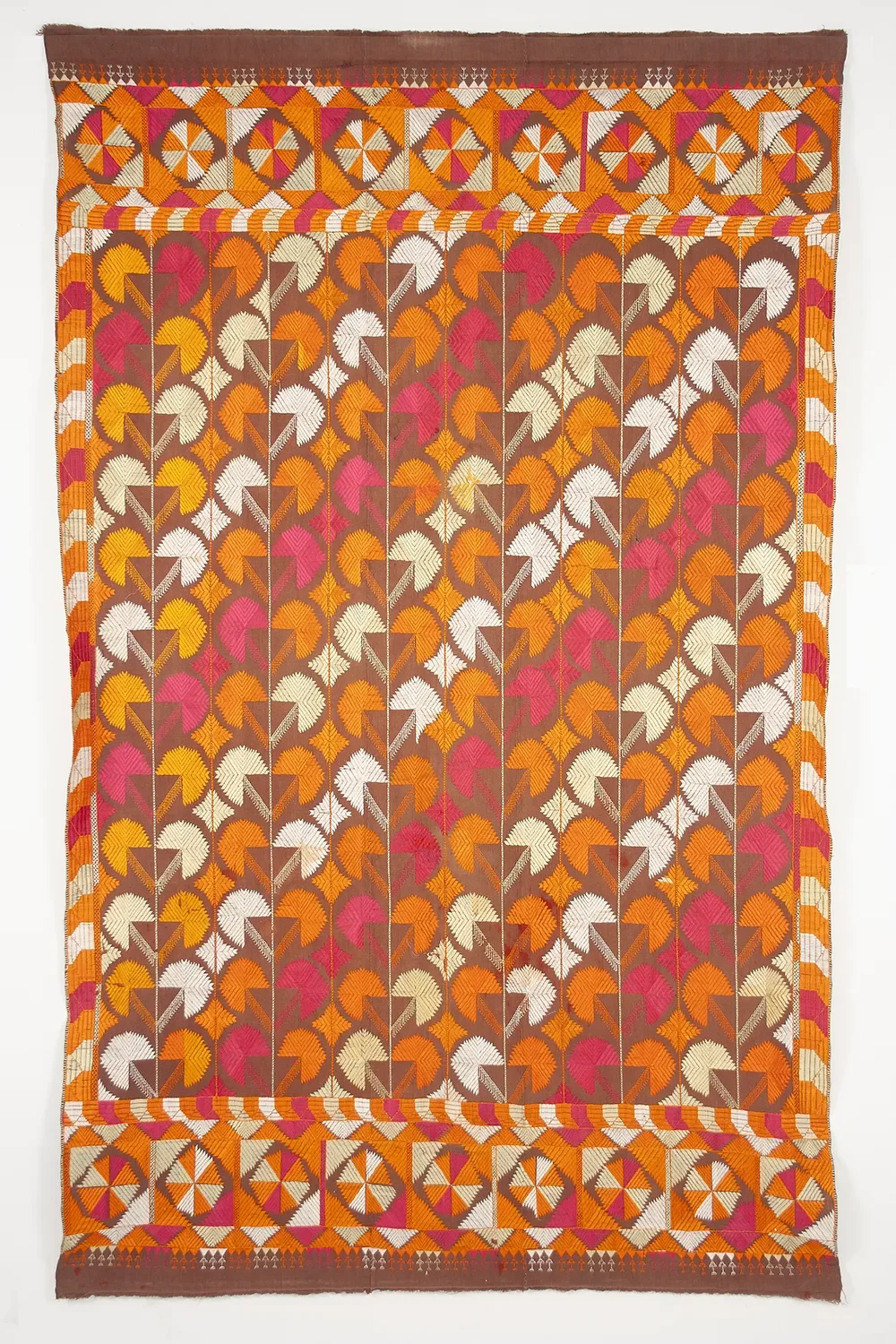
Phulkari Embroidered Wall Hanging
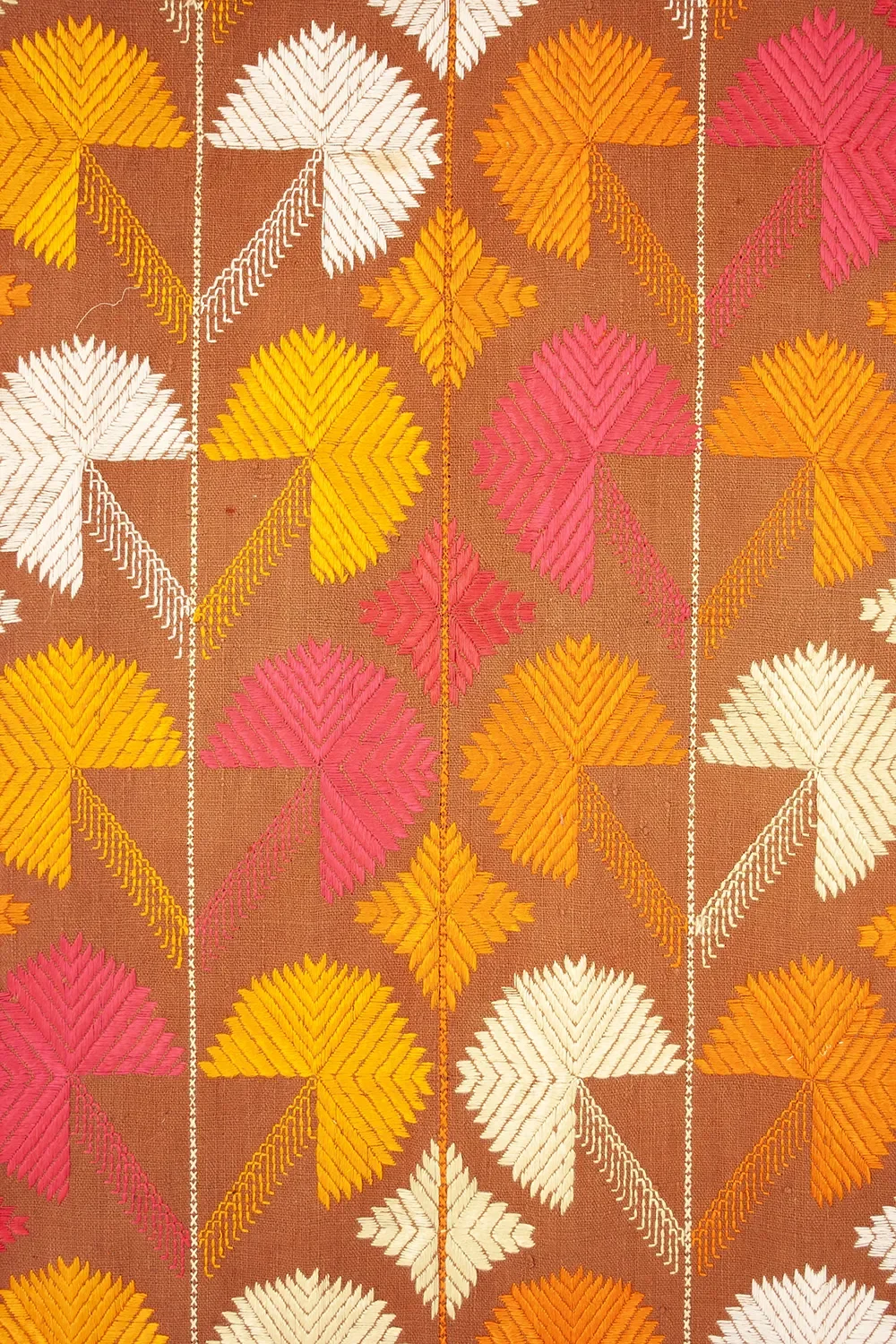
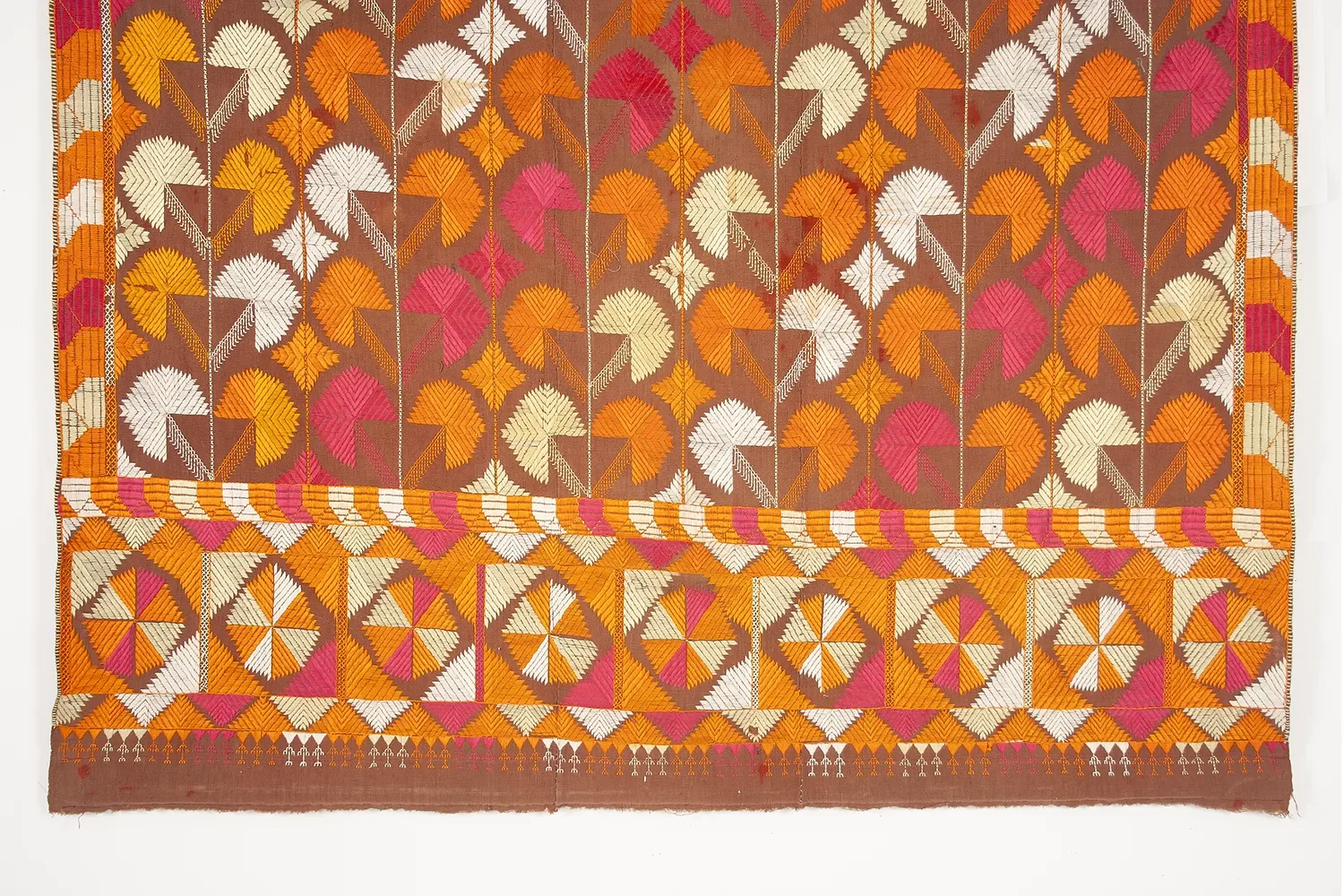
Orange, pink, cream and magenta pattern
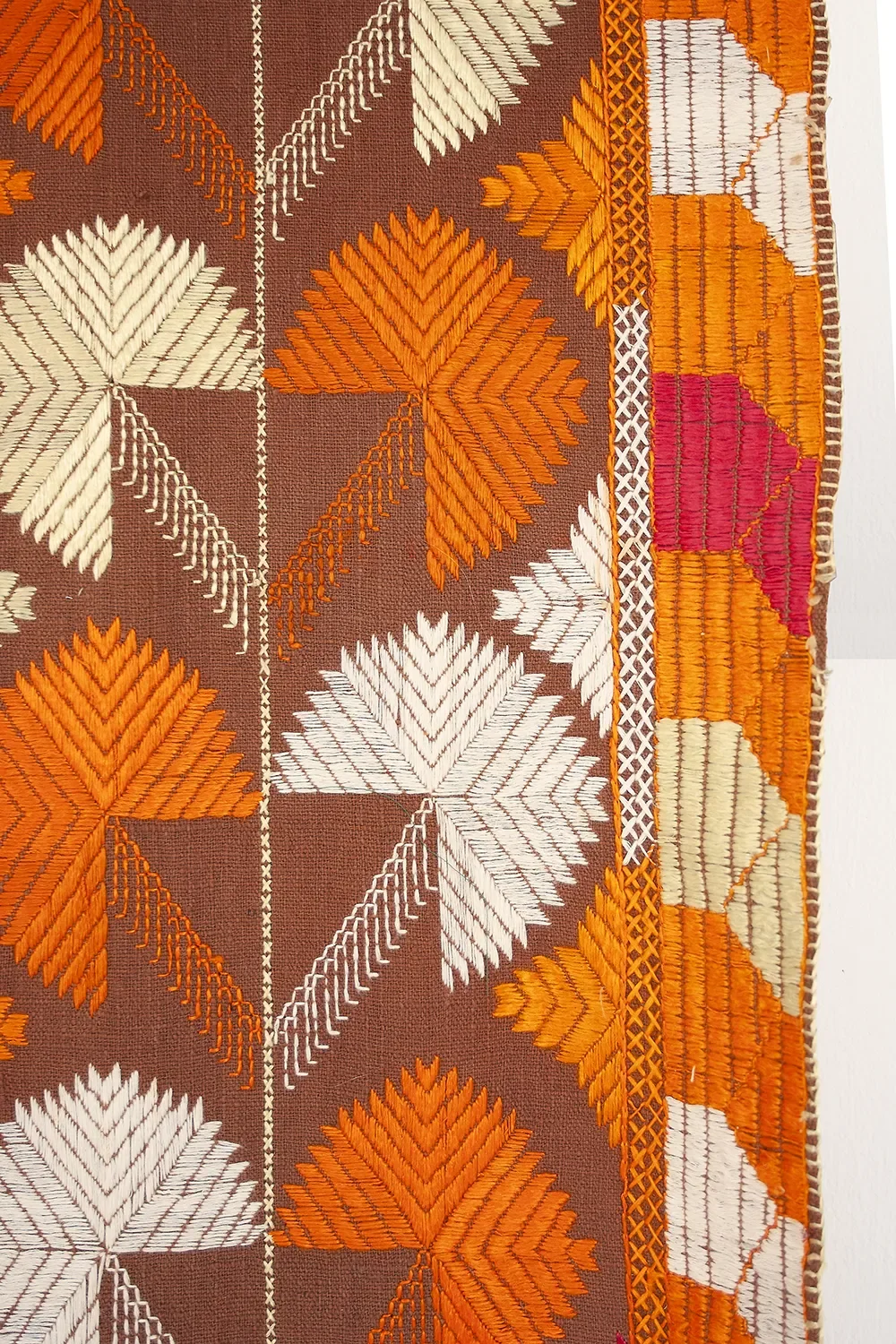
Phulkari is a traditional folk embroidery technique from the Punjab region of India and Pakistan. Translating to “flower work”, the handcrafted skill using coarse handspun cotton, khadi, and untwisted silk floss, features intricate, geometric, and floral motifs passed down as precious family heirlooms.
The exact origins of this technique are unknown, but references to it date back to the Vedic period. It was historically done to celebrate births, weddings, and festivals. Mothers and grandmothers would begin embroidering pieces upon the birth of a girl, believing that the textiles symbolized prosperity, life, and good fortune. The piece is constructed of several joined panels of cloth, a technique that is common in village textile work.
While traditional Phulkari has sparse or partial floral motifs, a Bagh (garden) is a masterpiece variant where the embroidery is so dense that the base cotton fabric is entirely covered.
-
Traditional Craftsmanship
Reverse Stitching: The embroidery is worked entirely from the reverse side of the fabric using a darning stitch without any prior tracing or drawing.
Classic Colors: The base cloth was typically dyed in auspicious earthy tones like red, maroon, or ochre. The silk threads usually popped in contrasting hues such as golden yellow, orange, magenta, and deep blue.
Protective Elements: Often, small intentional flaws or darker-colored thread motifs (known as nazar butti) were added to ward off the evil eye.
Title: Phulkari Embroidered Wall Hanging
Date: Mid 20th century, Acquired in 1985
Geography: Punjab, India
Medium: Cotton, silk embroidery
Dimensions: H. 86.5 in. W. 53 in.
Provenance: Gift from Subi Mann
Inventory Number: IN.42