Sumatran Batik Sarong
Stamp print, dark brown and gold pattern
Sumatra did not develop a single standardized batik vocabulary comparable to the highly codified court traditions of Yogyakarta and Surakarta in Java. Hence, this Sumatran batik encompasses a composite decorative system influenced by Malay traditions, Islamic culture, regional court traditions, and centuries of trade with India, China and other parts of Southeast Asia.
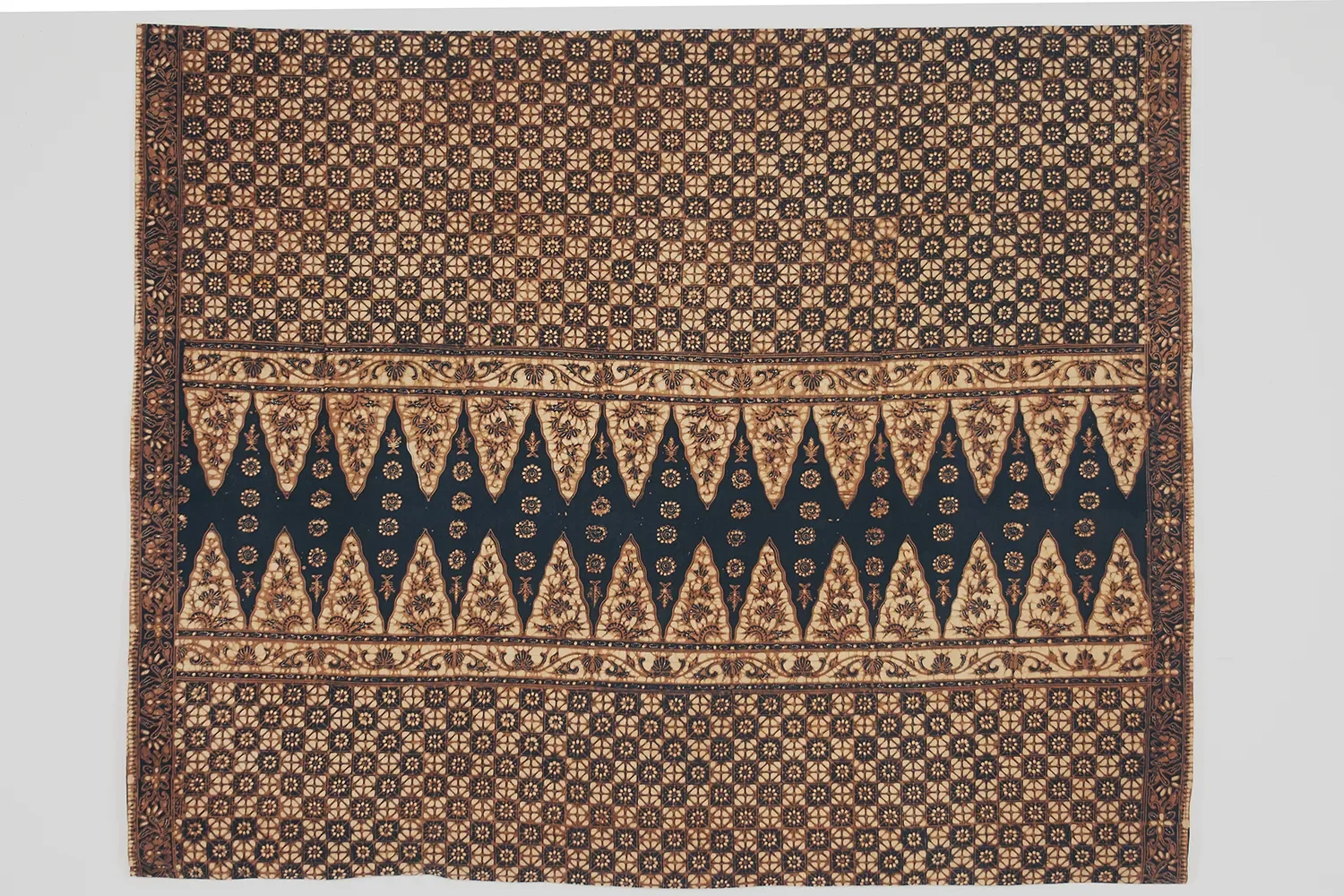
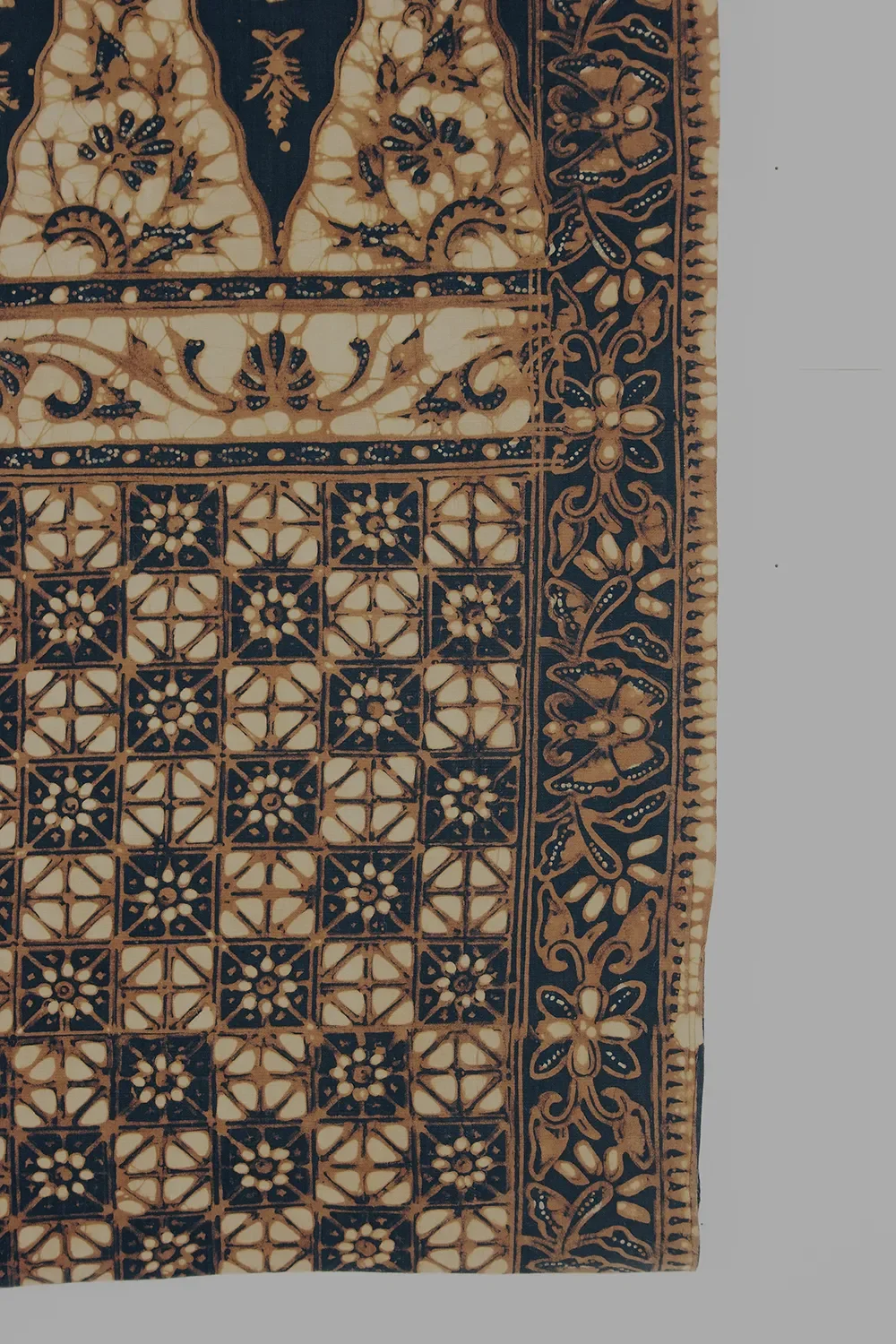
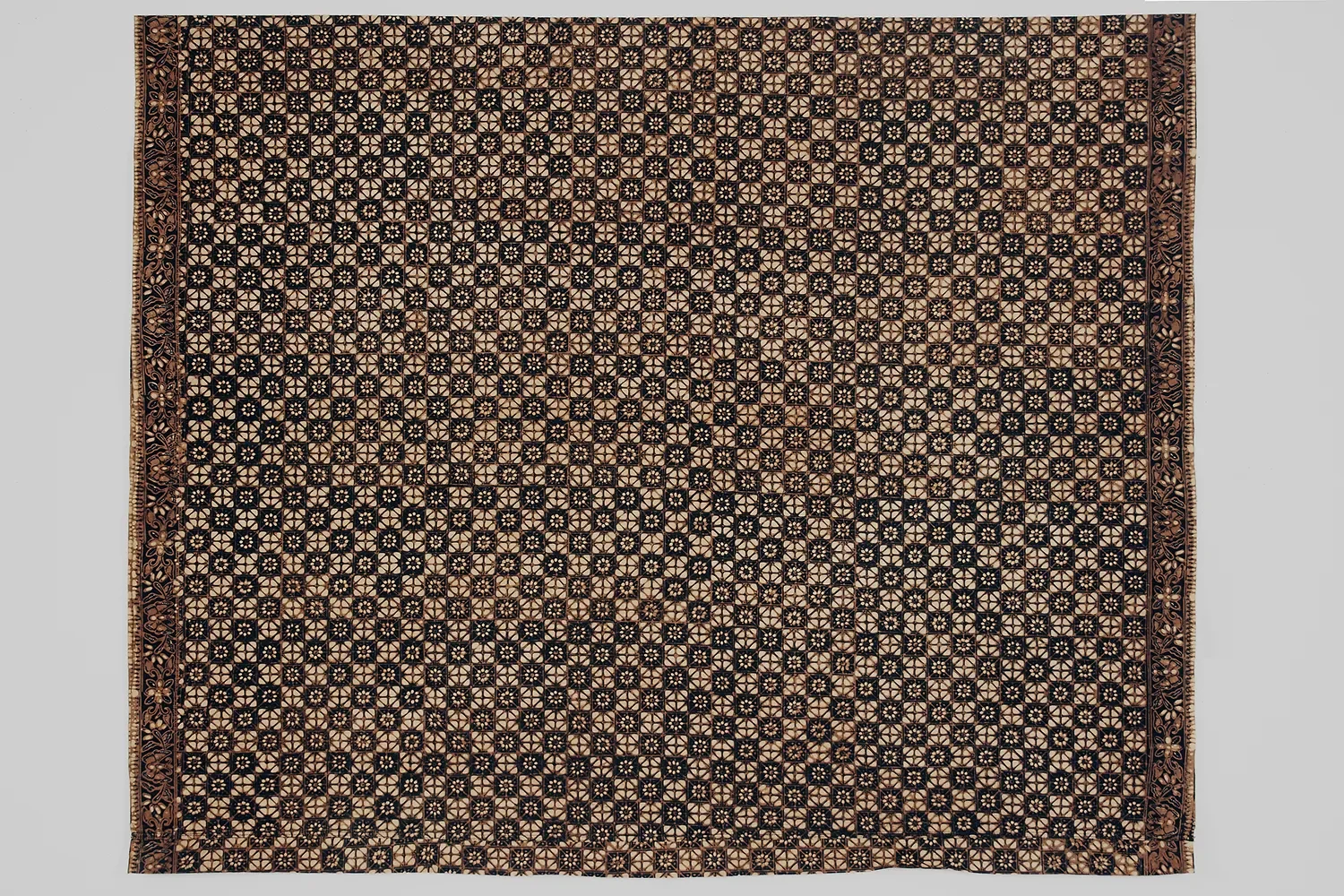
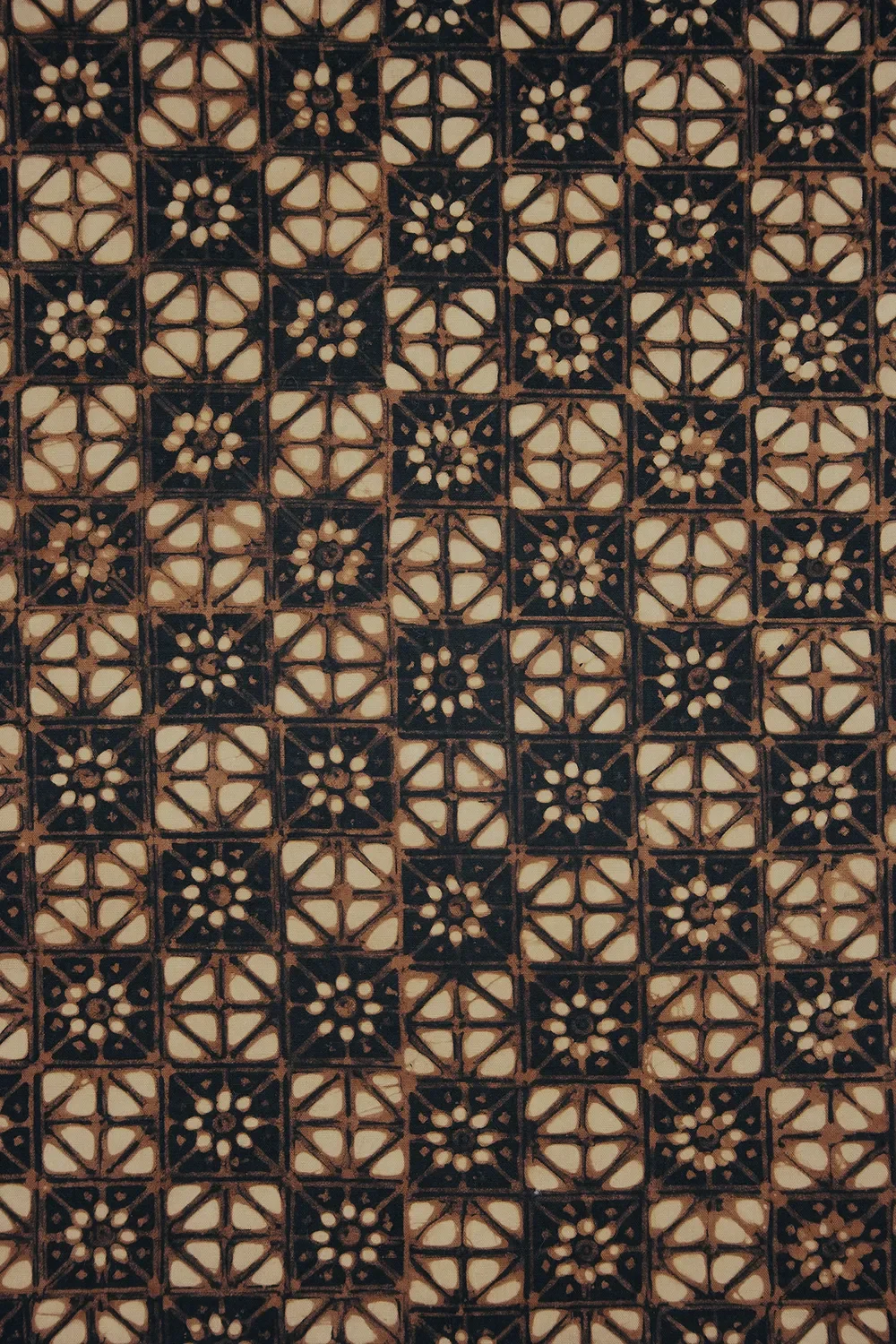
This wax batik shows a very orderly geometric field, an exuberant floral border, a strong central band, and pointed triangular motifs called pucuk rebung (stylized “bamboo shoot”). Pucuk rebung is a longstanding motif in Sumatran and Malay textile traditions associated with growth, strength and prosperity. The dense geometric field and floral borders belong to the broader Indonesian batik tradition of geometric patterning, in which small, repeated units are transformed into a continuous field. Geometric motifs can carry associations with order, balance and harmony.
-
This combination of flowers and geometric structure is especially characteristic of batik in which natural forms are disciplined into a repeating pattern rather than represented realistically. This is not simply one isolated motif but a composite decorative system.
The design was created by repeatedly stamping a natural fabric (such as cotton or silk) with a wood and metal stamp called a tjap or cap (pronounced and sometimes called a chop). This tool consists of intricately shaped thin copper strips welded or soldered onto a metal framework with a handle (often featuring wooden elements or gripped via a handle). Artisans dip the tjaps into molten wax to quickly and repeatedly stamp geometric or floral designs onto fabric
The stamped melted wax blocks out specific patterns or areas, preventing dye from penetrating those sections. The fabric is then dipped into successively darker dye baths. This process of waxing, dyeing, and dewaxing can be repeated in layers to create vibrant, intricate multicolored designs.
An Indonesian sarong is a traditional tube-shaped garment made from brightly colored fabric, usually silk, cotton, or rayon. It is wrapped around the lower body by both men and women and tucked or tied at the waist. The garment is deeply rooted in Indonesian culture, serving as everyday clothing, ceremonial attire, and a versatile household item.
Title: Batik Sarong
Date: Acquired in 1996
Geography: Sumatra, Indonesia
Medium: Cotton
Dimensions: H. 37 in. W. 46 in.
Provenance: Purchased in Sumatra, Indonesia
Inventory Number: IND.10