Batik Sarong
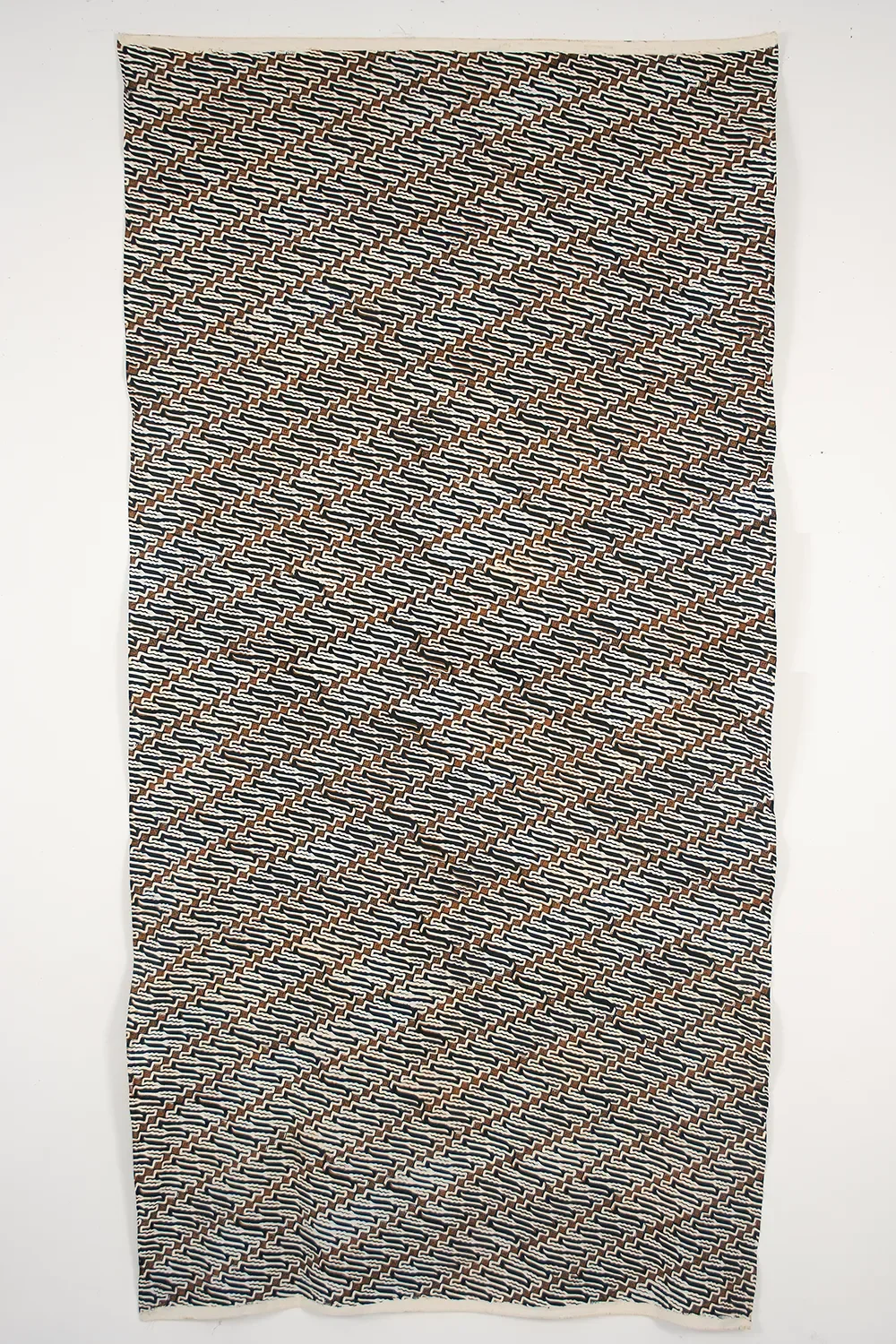
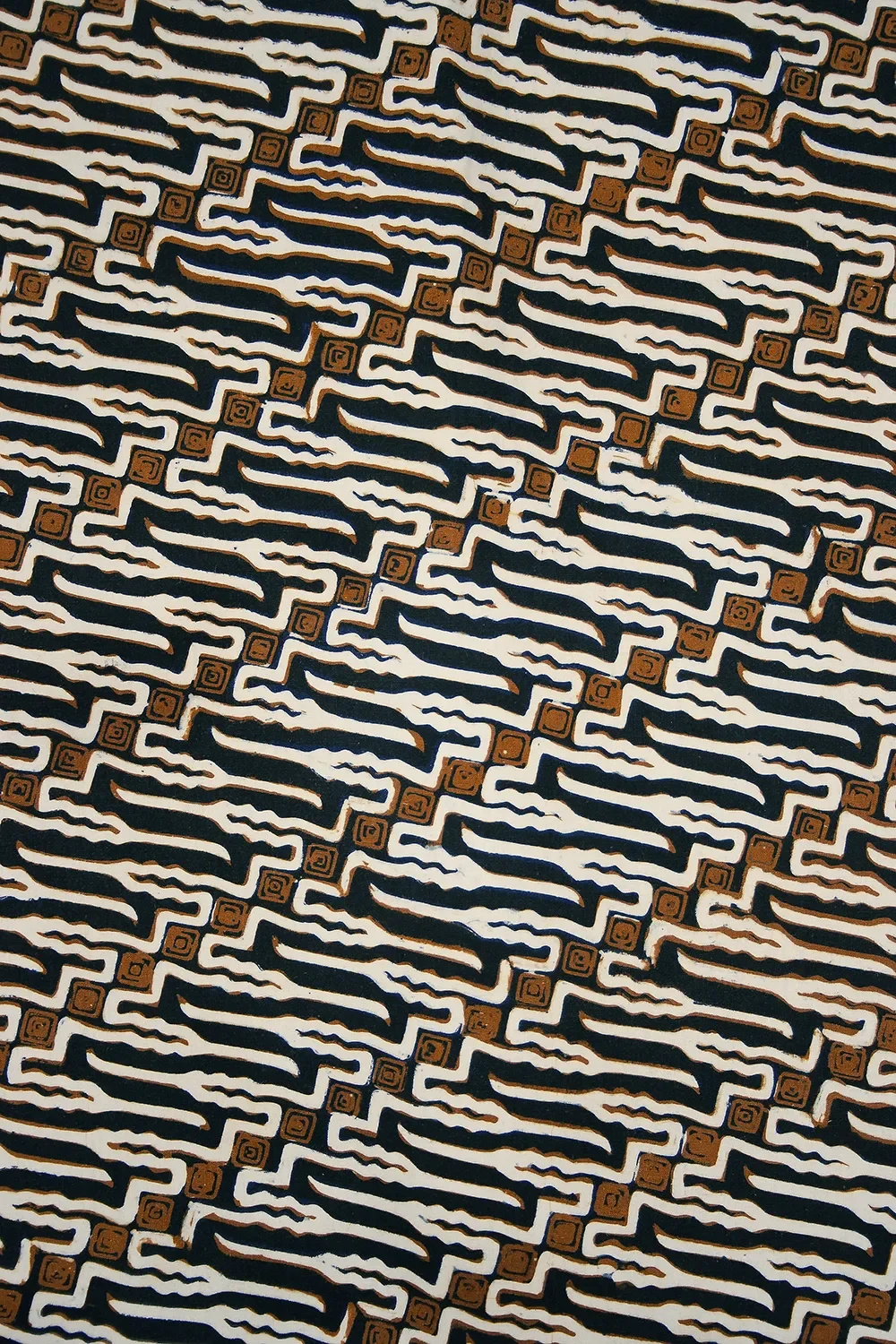
Black and brown knife pattern
This Javanese batik features the knife pattern, known as the Parang motif, one of the oldest and most famous traditional designs in the region. The pattern features thick, parallel bands running in a slanting, diagonal direction (garis miring) imitating knife blades or daggers. This pattern symbolizes resilience, strength, and the continuity of life. Historically, Parang was worn by only by Javanese royalty in the courts of Central Java, such as Surakarta and Yogyakarta, symbolizing their authority and the endless pursuit of self-improvement. Today, with the shift in royal authority, anyone can wear the striking Parang pattern, and it appears on clothing, woodcarvings, and traditional musical instruments.
-
This sarong is perfect example of a batik cap (stamped) textile. The design was created by repeatedly stamping a natural fabric (such as cotton or silk) with a wood and metal stamp called a tjap or cap (pronounced and sometimes called a chop). This tool consists of intricately shaped thin copper strips welded or soldered onto a metal framework with a handle (often featuring wooden elements or gripped via a handle). Artisans dip the tjaps into molten wax to quickly and repeatedly stamp designs onto fabric. The melted wax blocks out specific areas, preventing dye from penetrating those sections. This process of waxing, dyeing, and dewaxing can be repeated in layers to create vibrant, intricate multicolored designs.
An Indonesian sarong is a traditional tube-shaped garment made from brightly colored fabric, usually silk, cotton, or rayon. It is wrapped around the lower body by both men and women and tucked or tied at the waist. The garment is deeply rooted in Indonesian culture, serving as everyday clothing, ceremonial attire, a or versatile household item.
Title: Batik Sarong
Date: 1996
Geography: Java, Indonesia
Medium: Cotton
Dimensions: H. 82 in. W. 40 in.
Provenance: Purchased in Yogyakarta (or Jogja), Indonesia
Inventory Number: IND.13