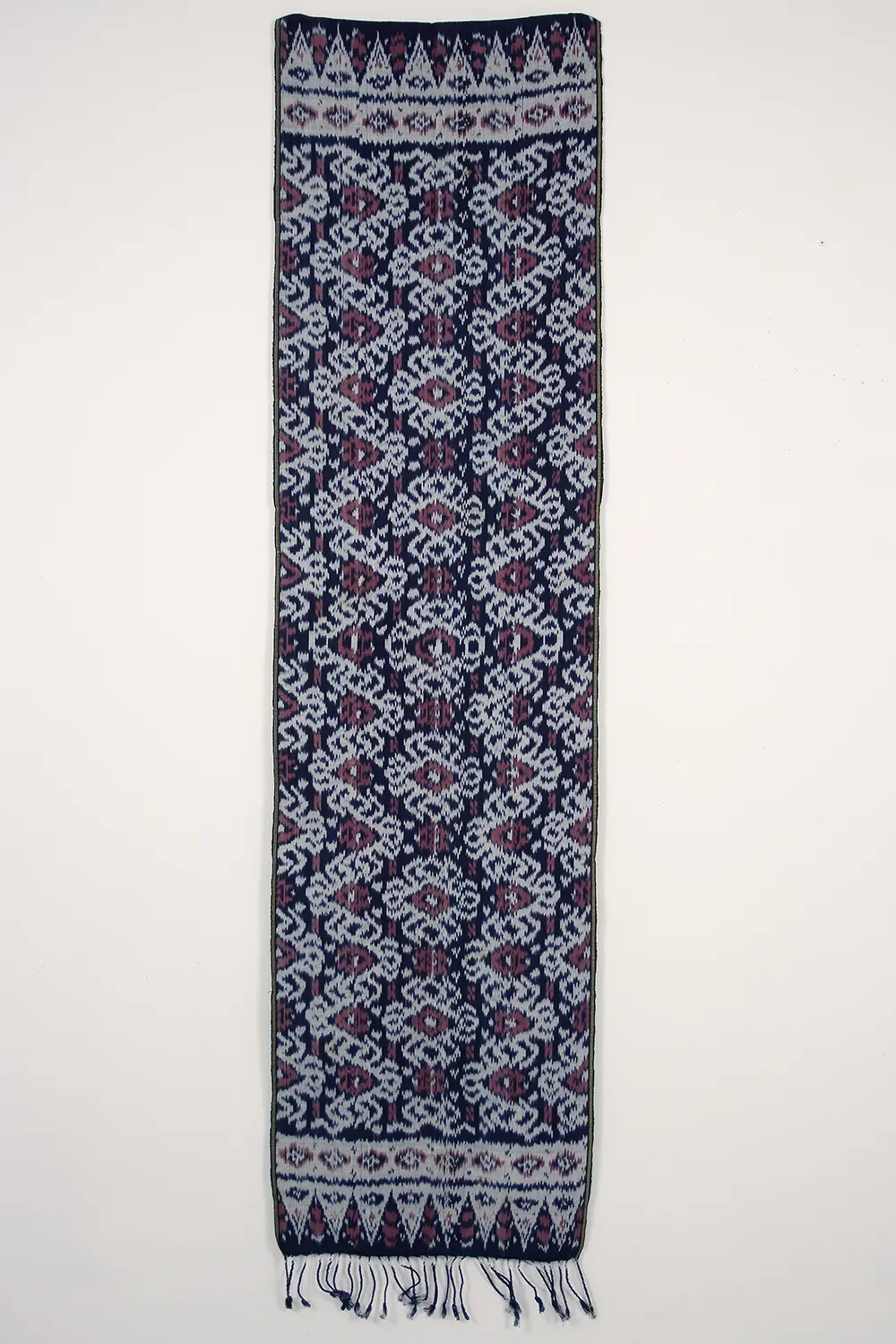
Sumban Ikat Hinggi (scarf)
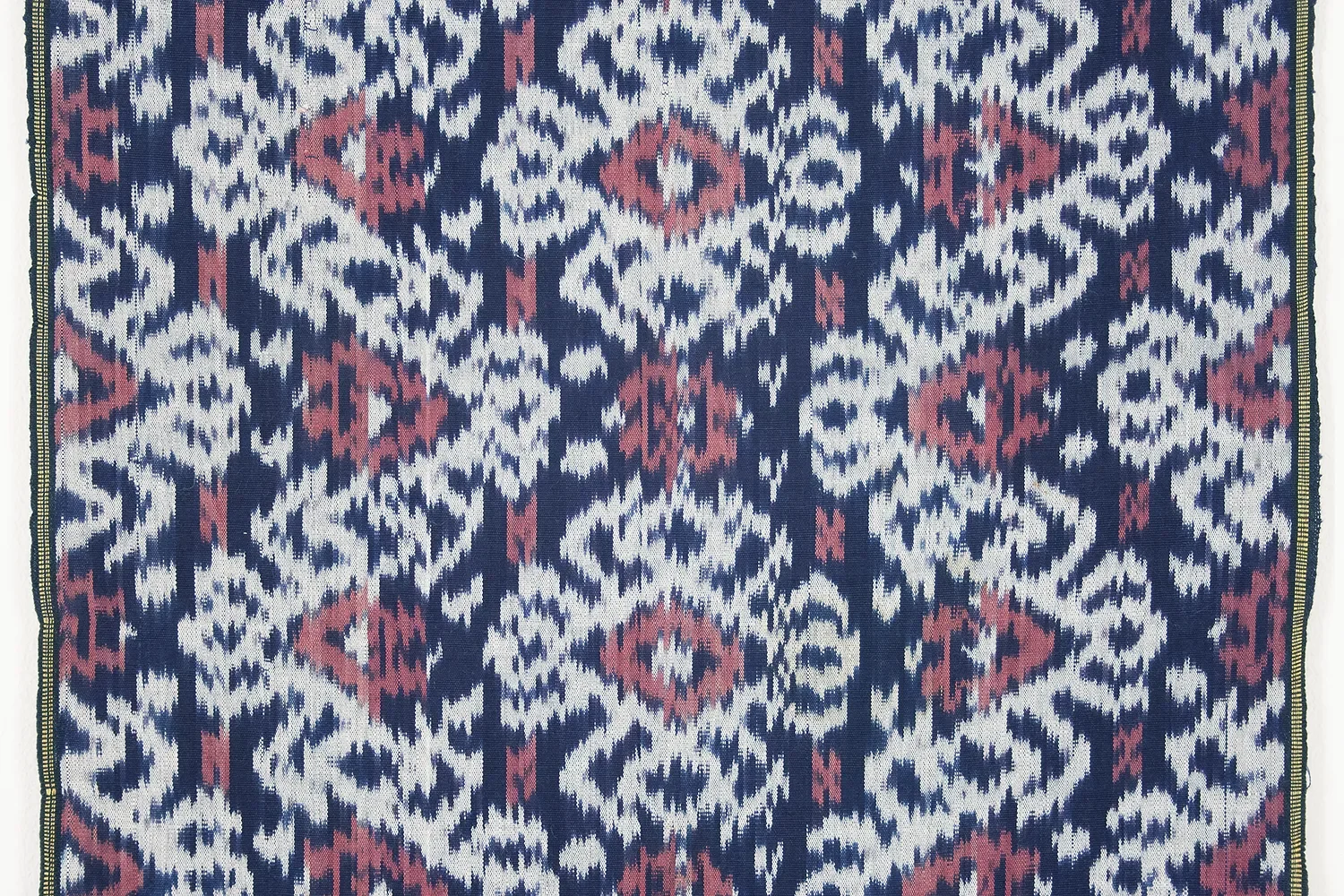
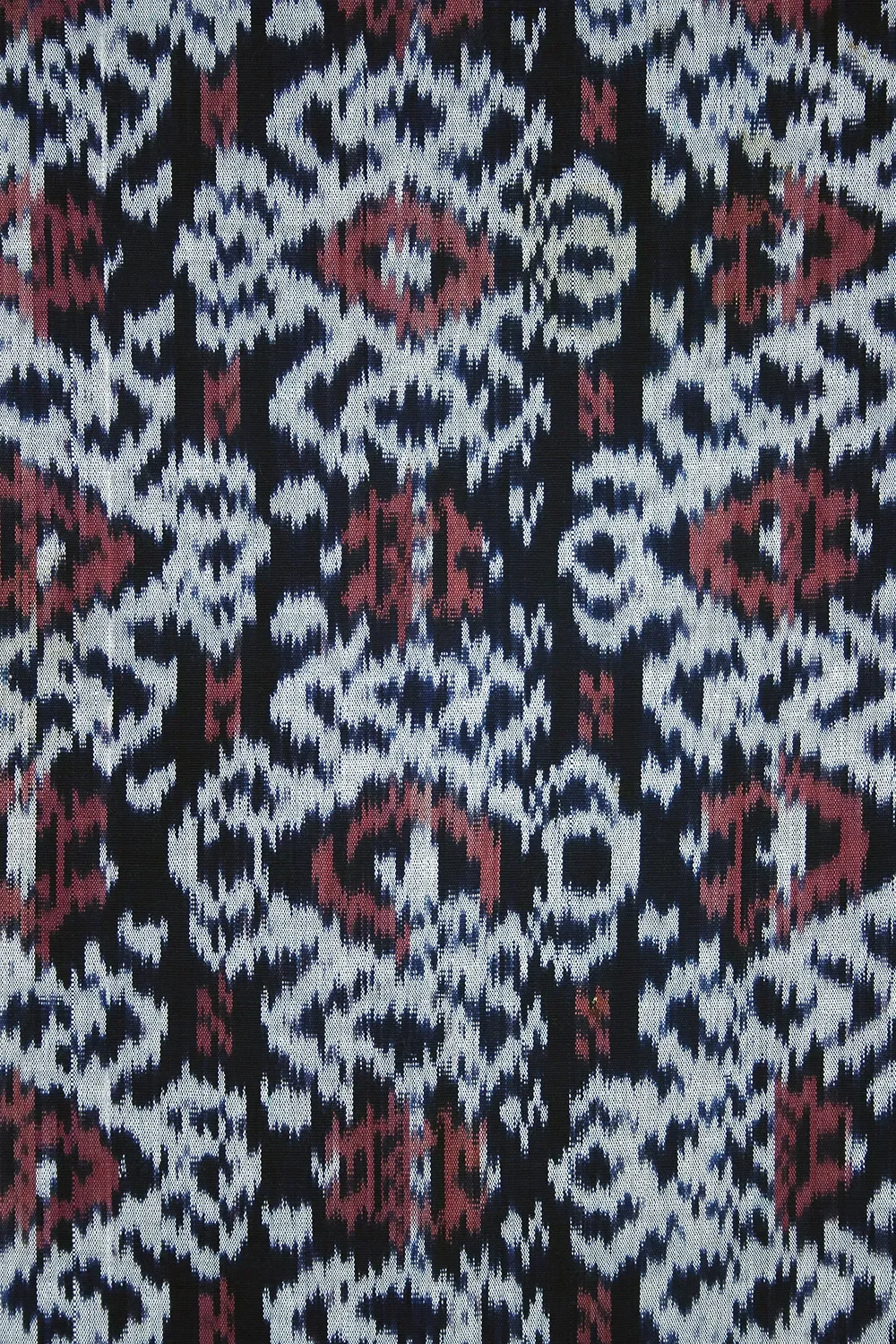
Indonesian ikat is a labor-intensive, hand-woven textile famous for its rich colors and distinct “blurry” or feathered patterns. The word ikat derives from the Malay-Indonesian word for "to tie" or "to bind," which perfectly describes the intricate resist-dyeing method used to create the fabric. Sumba textiles are famous for bold figurative imagery that encodes beliefs rank and history. Meanings vary by village and clan
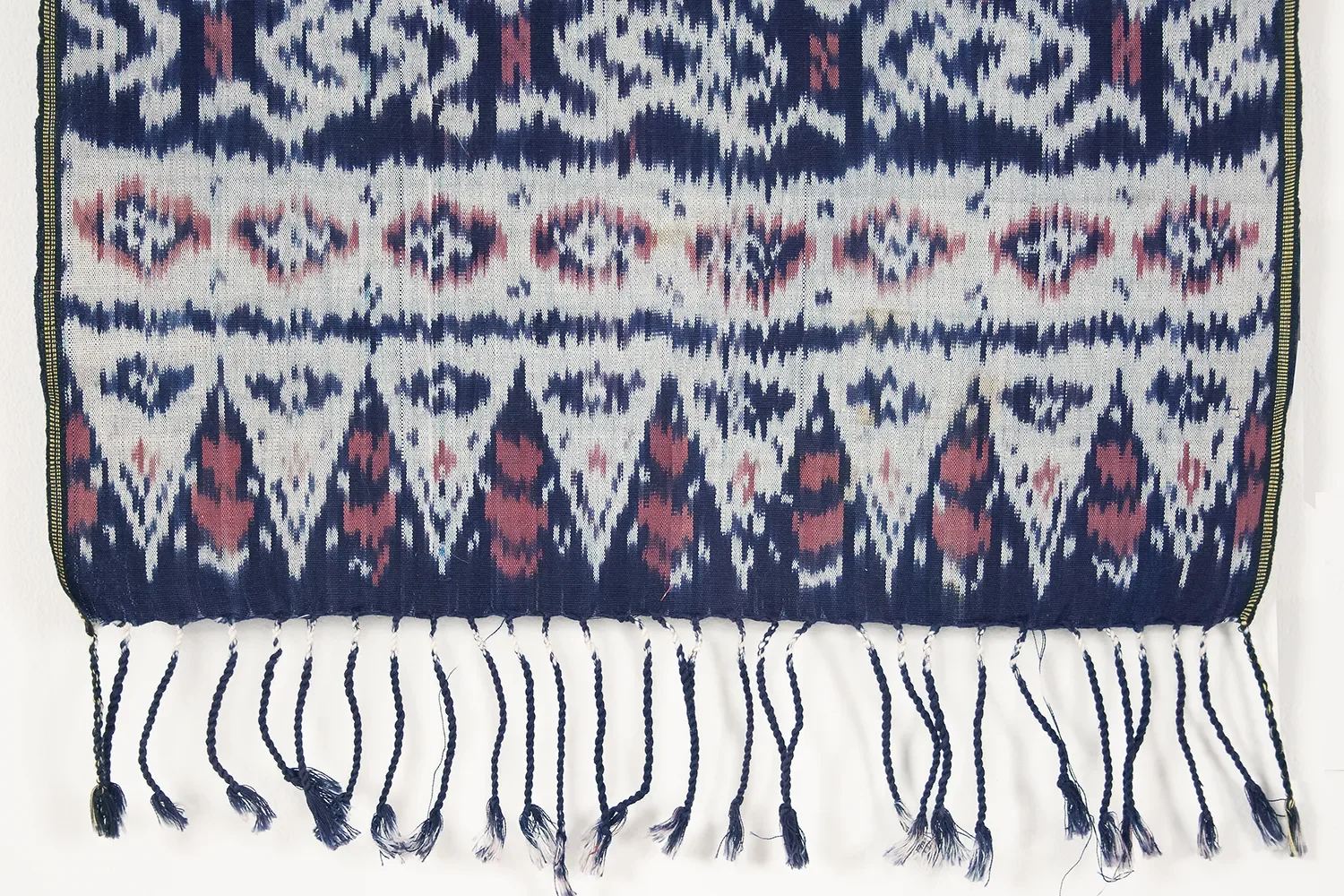
An Indonesian ikat hinggi is a traditional handwoven, ceremonial textile made by the people of Sumba in Indonesia. The ikat technique involves tightly wrapped bundles of cotton yarns with fibers to resist dye, while dipping them in natural pigments before weaving. A hinggi often includes bold figurative imagery, but this example shows a simplified geometric sequence. They are worn as male attire for formal occasions, and always worn in matching pairs, wrapped around the waist and draped over the shoulder.
Across eastern Indonesia’s island of Sumba (NTT province) handwoven textiles have long served as status markers and ceremonial exchange valuables given at marriages funerals and other rites. The designs techniques and even the way cloths are paired for exchange encode local ideas about rank reciprocity and ancestry. This worldview is tied to Marapu Sumba’s ancestral belief system in which paired forces male/female sun/moon life/death are kept in balance through ritual.
-
Sumba’s cloth is rooted and cosmopolitan: centuries of trade brought Indian patola beads and foreign motifs that were reinterpreted within Sumba’s own visual language rather than copied outright Sumba textiles are famous for bold figurative imagery that encodes beliefs rank and history. Meanings vary by village and clan
The Ikat Process:
Resist-Dye: Yarns are stretched on a frame and bundled together. Artisans wrap these bundles tightly with strips of plant material or plastic to block out dye in specific areas.
Dyeing: The threads are then dipped into a dye bath. The tied sections resist the color.
Layering Colors: For multicolored patterns, the process is repeated—bindings are removed, other sections are tied off, and the threads are dyed again.
Weaving: The meticulously dyed threads are carefully arranged on a loom. As they are woven together, the pattern gradually appears.
Title: Ikat Table Runner
Date: 2008-2010
Geography: Sumba, Indonesia
Medium: Cotton
Dimensions: H. 72 in. W. 18 in.
Provenance: Gift from Greg Skora
Inventory Number: IND.15