Toba Batak Ulos
Ikat with decorative woven/beaded elements and fringe
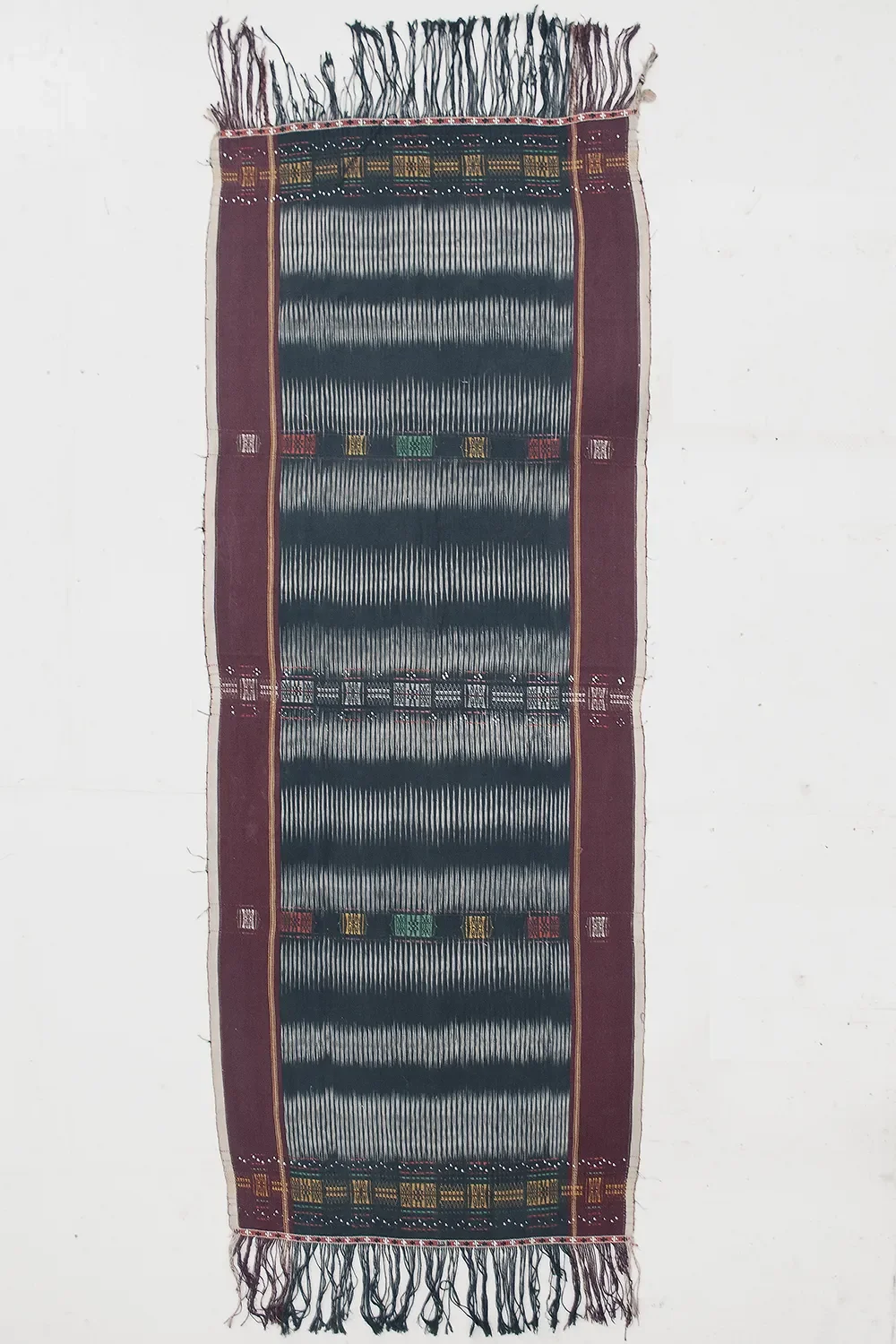
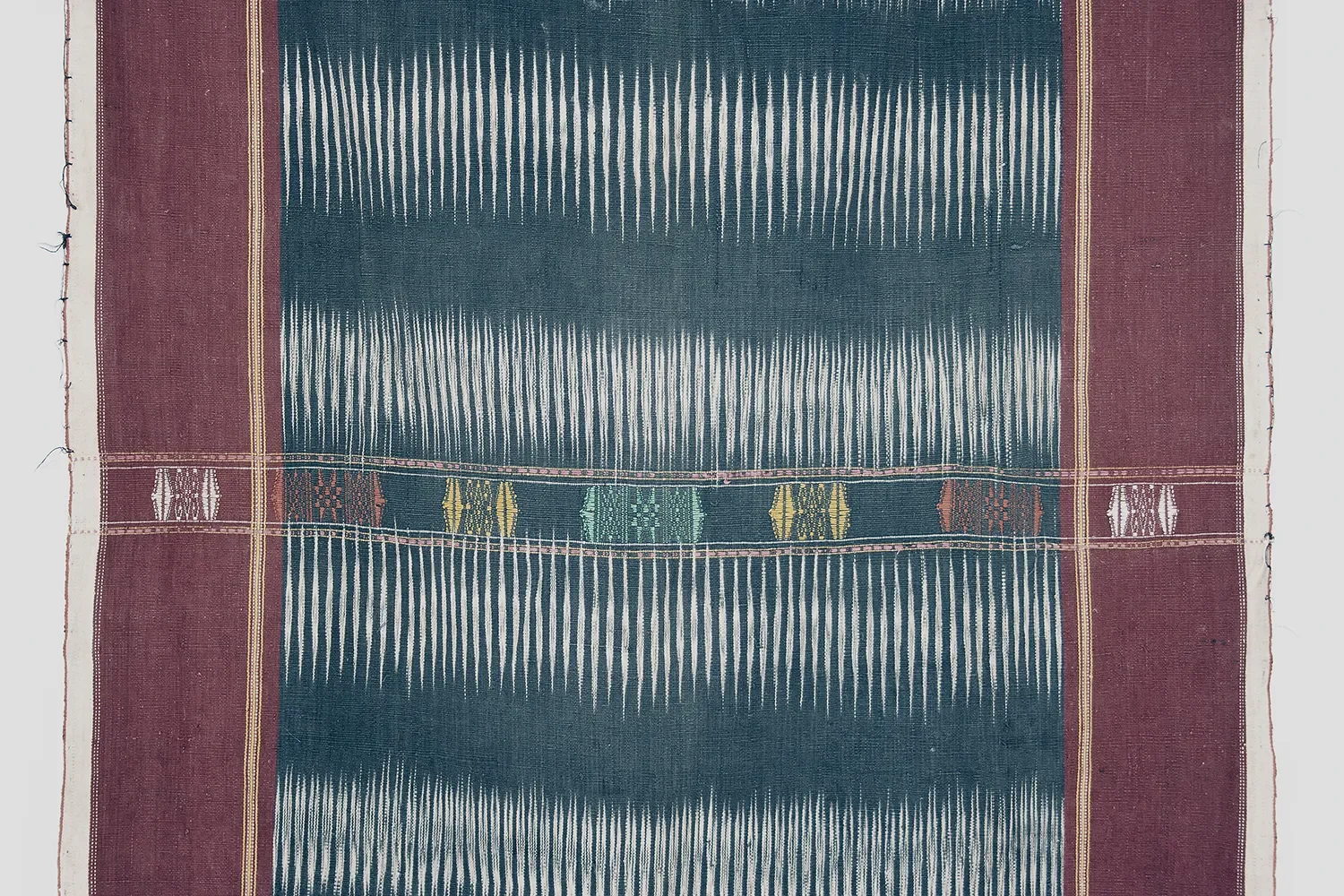
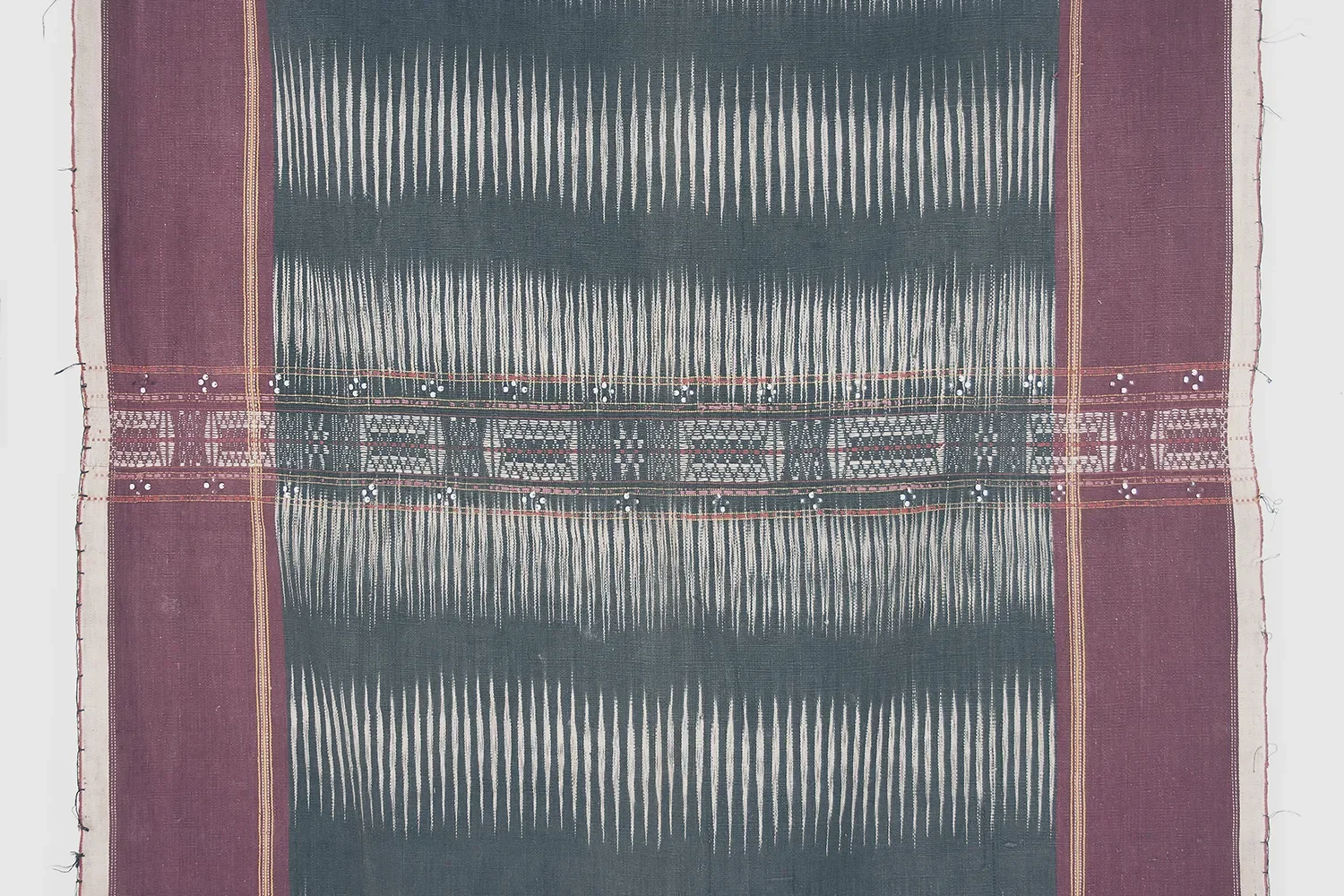
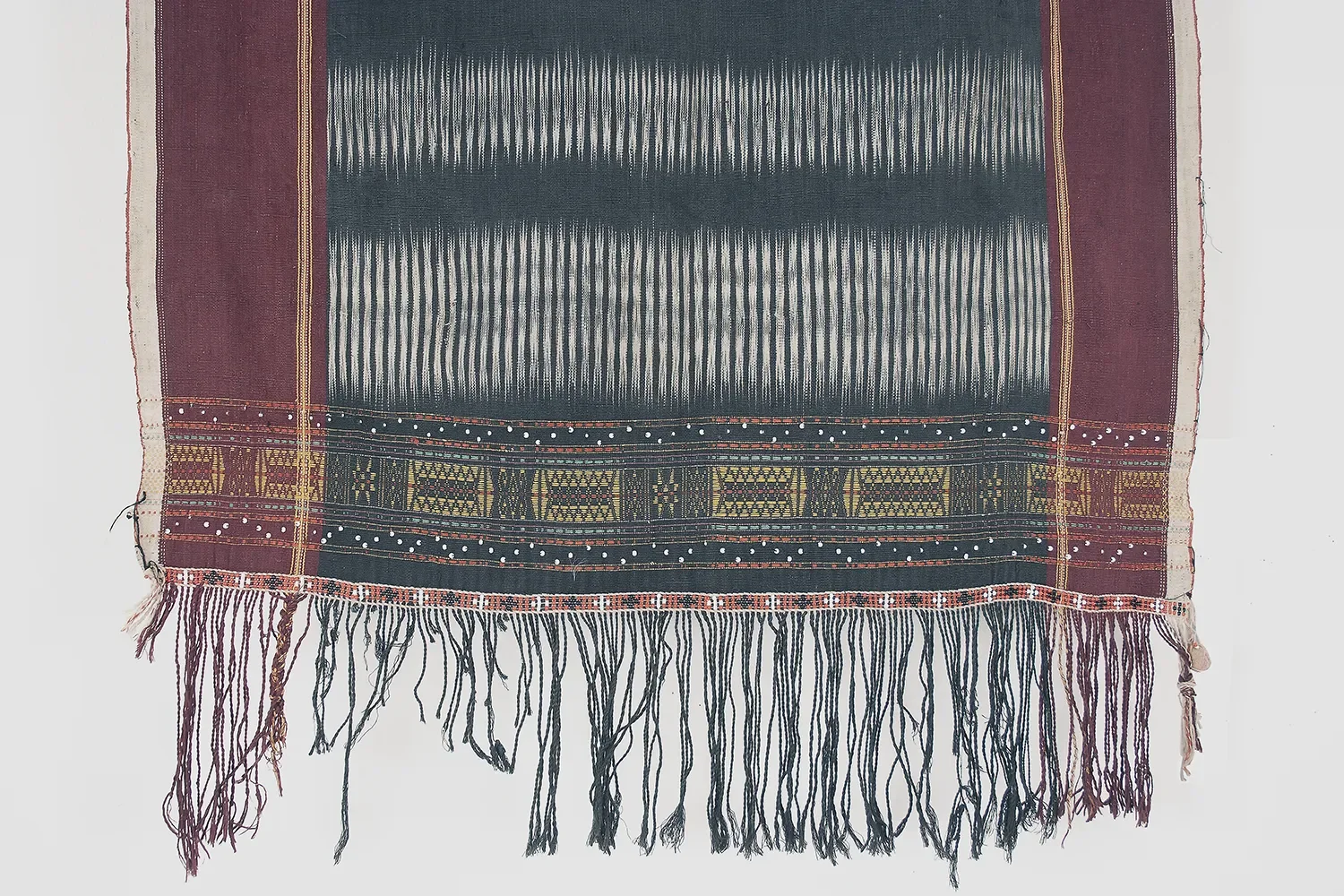
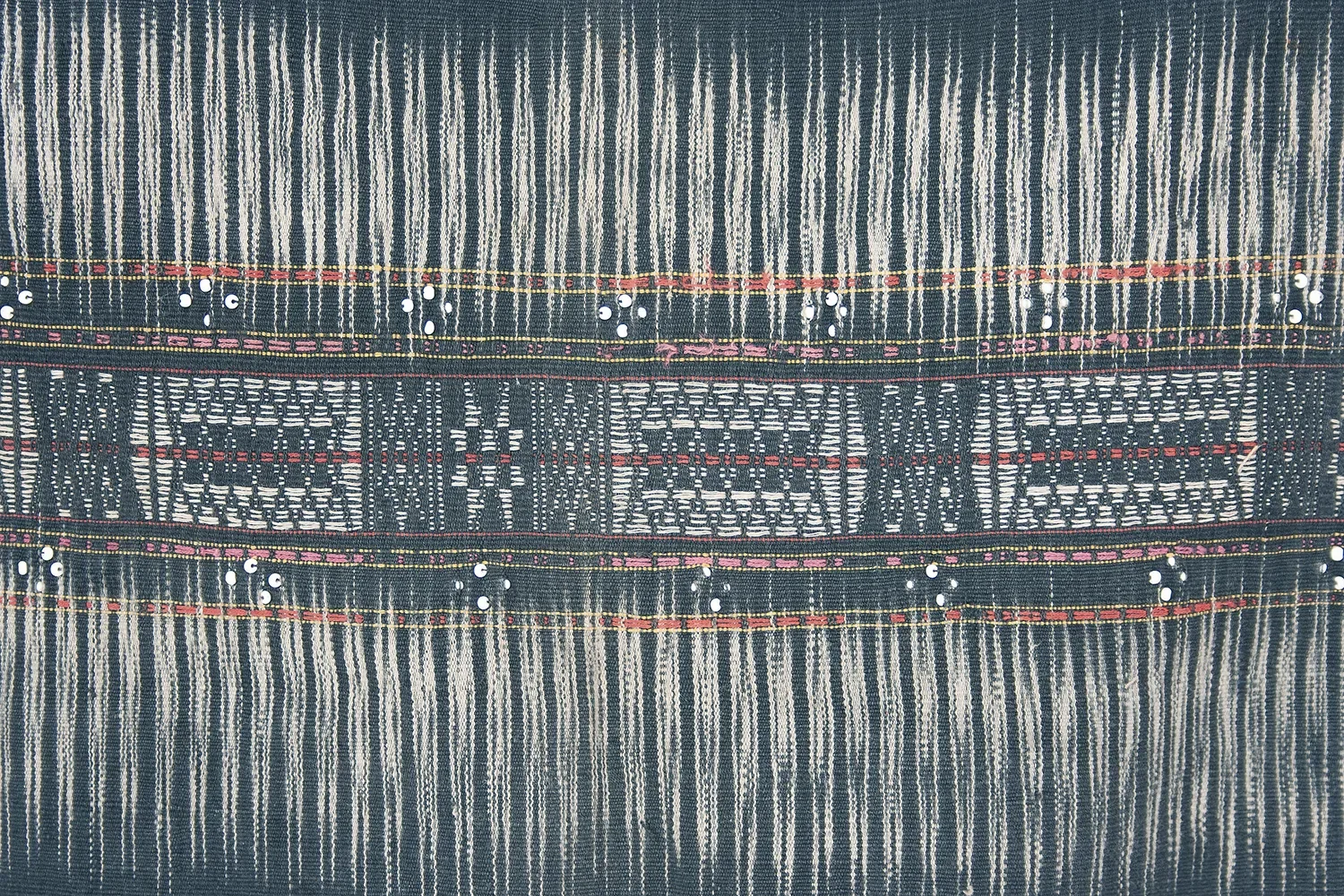
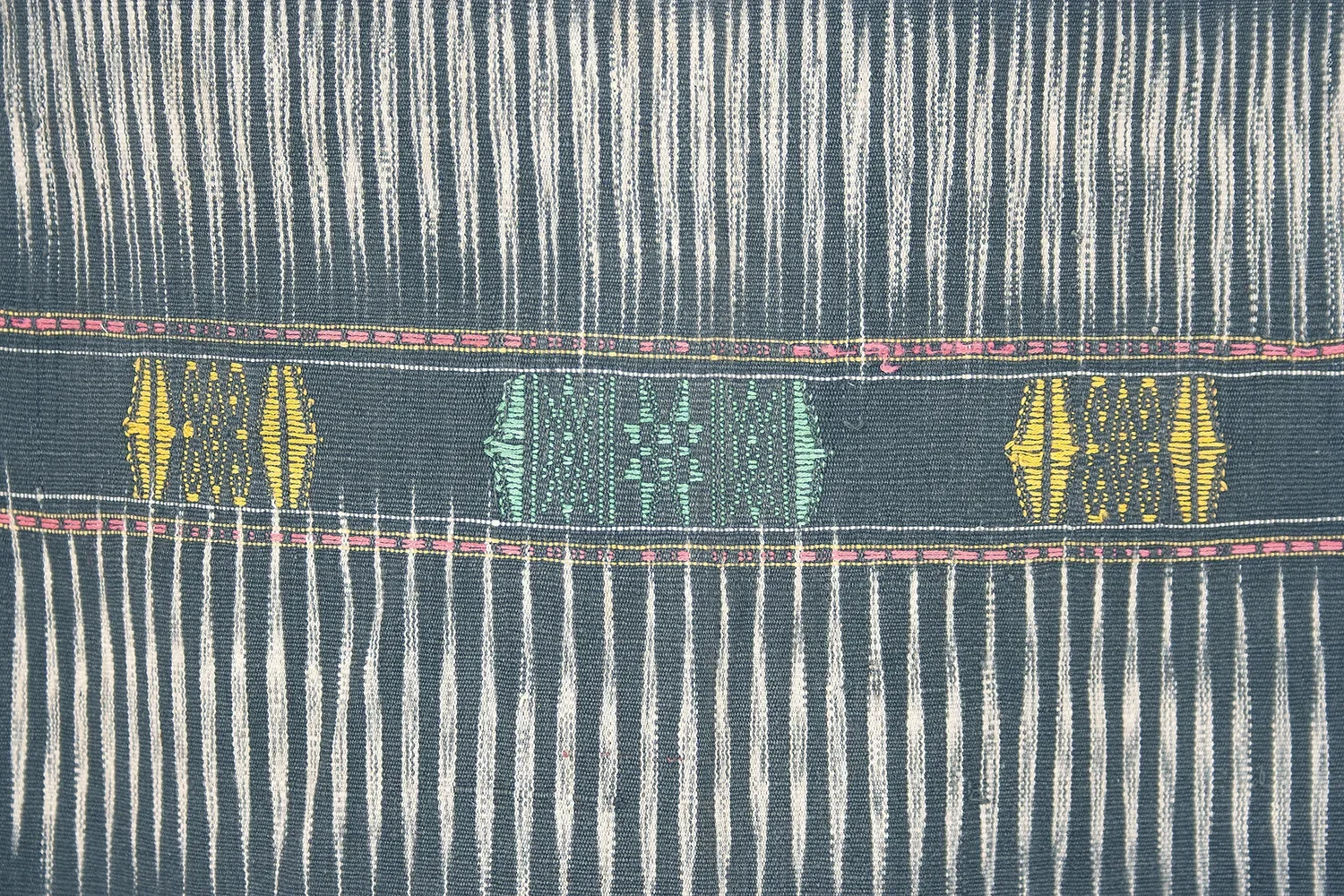
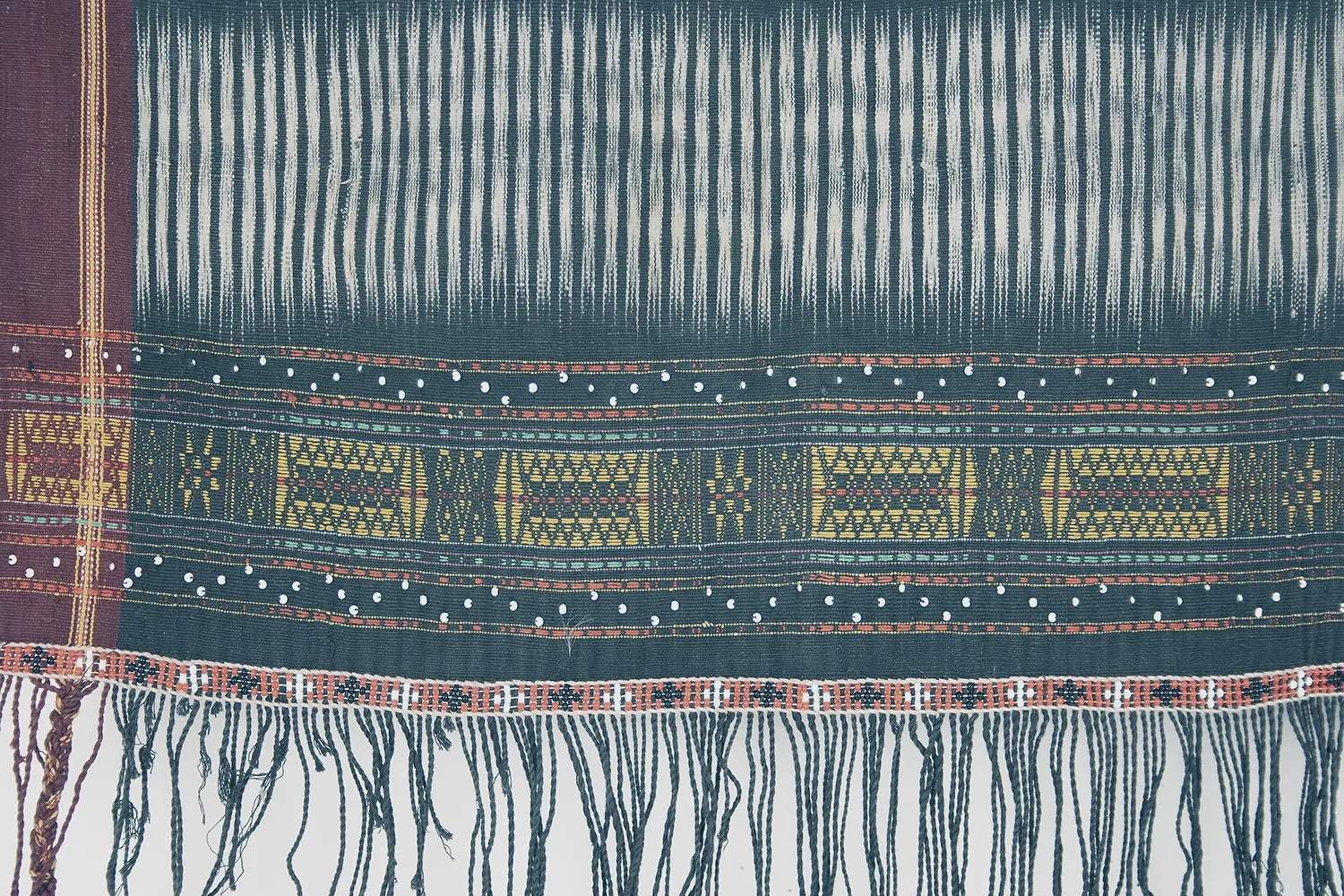
An ulos, is a traditional woven cloth of the Batak peoples. This handwoven Toba Batak textile combined warp ikat with supplementary decorative weaving and an elaborately finished fringe. The central field displays ikat designs in fine black, white, bordered by maroon side panels and bands of small geometric designs in red, yellow, green, white, and black. The ends are finished with decorative woven sections and long fringe. Ulos are traditional Batak textiles used as garments, shoulder cloths, ceremonial textiles, and important gifts. The exact type of ulos and original use of this piece are uncertain.
-
The irregularity and very fine vertical striping and areas of blurred, irregular horizontal patterning of the central field are consistent with warp ikat, in which sections of the warp yarns are tied and resist-dyed before the cloth is woven.
The maroon side panels frame the central field, while the narrow bands at the ends contain small geometric motifs in red, yellow, green, white, and black. These appear to be made with supplementary weaving techniques, in which additional threads are introduced to create raised or highly patterned areas. Similar combinations of warp ikat and supplementary weft occur in traditional Toba Batak ulos
Ulos are much more than ordinary garments. Among the Batak, they have traditionally functioned as shoulder cloths, ceremonial textiles, heirlooms, and important gifts associated with births, marriages, funerals, and other life-cycle events. Their designs and construction can communicate social and ceremonial significance.
Rural Sumatra around Lake Toba is the cultural heartland of the Toba Batak, and traditional ulos weaving continues in villages around the lake.
Title: Ikat Hinggi
Date: 1996
Geography: Sumatra, Indonesia
Medium: Cotton, warp ikat, supplementary weaving, handwoven fringe
Dimensions: H. 64 in. W. 25 in.
Provenance: Purchased in Lake Toba region, Sumatra
Inventory Number: IND.16