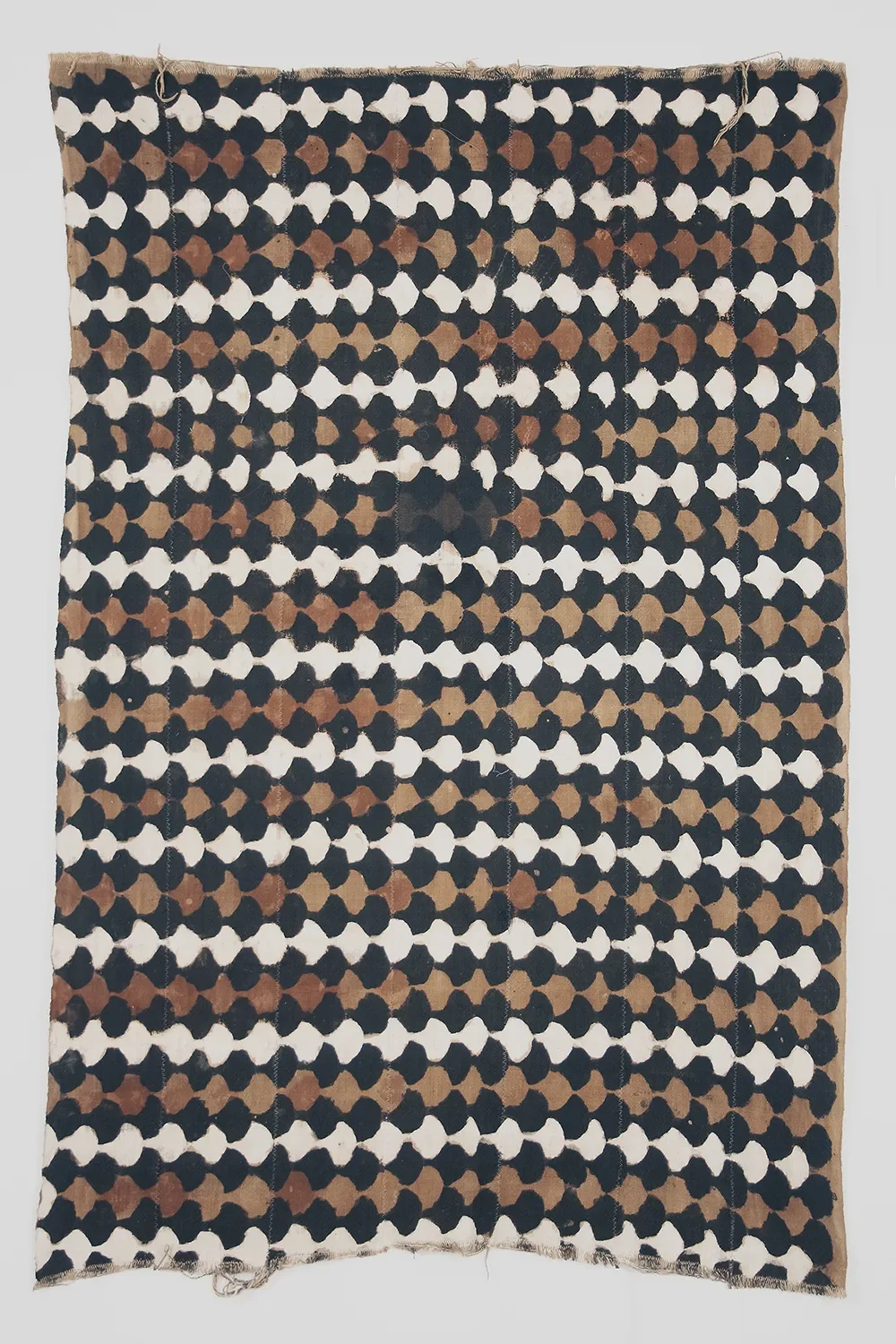
Mud Cloth
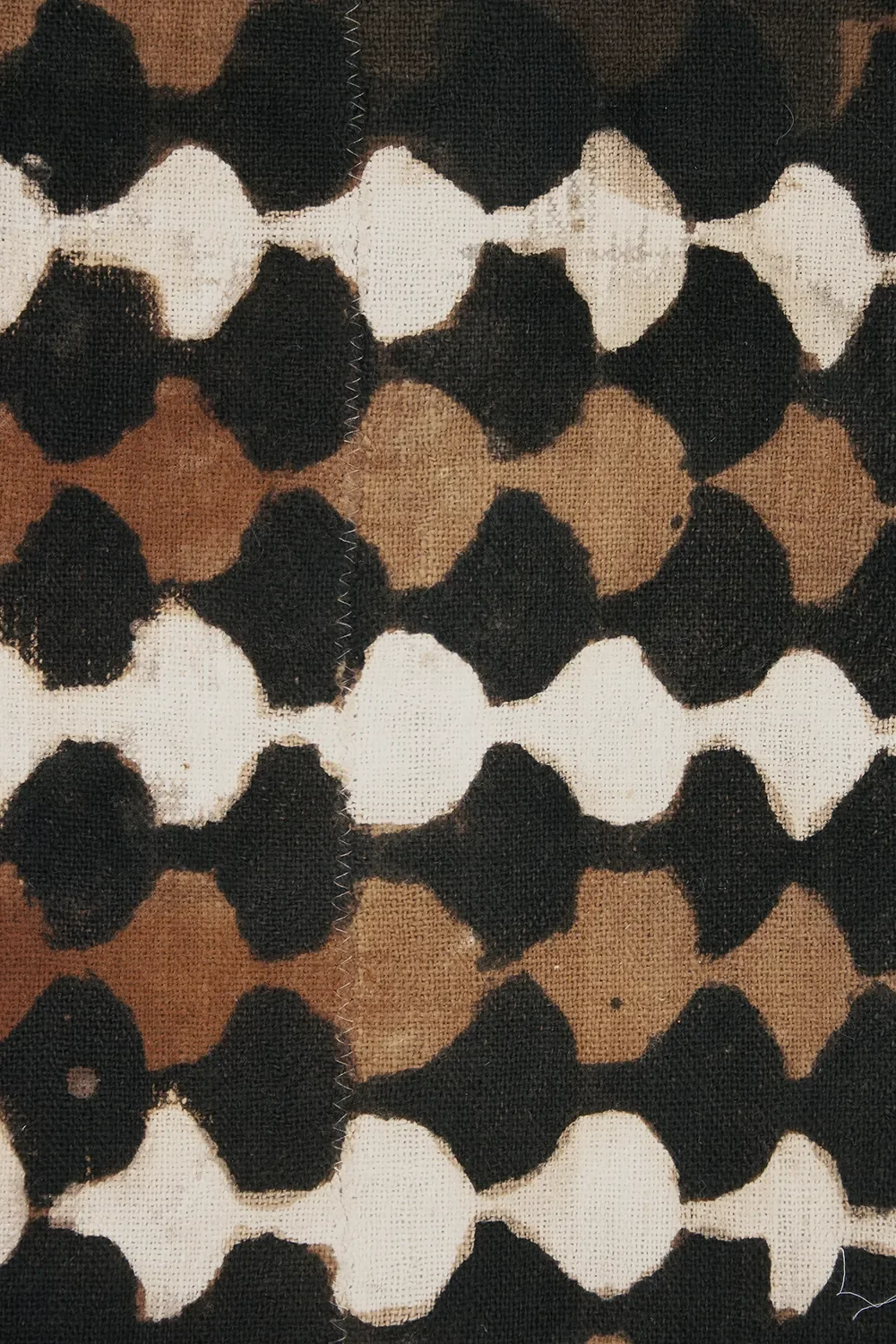
Dark brown and crème
Mali mud cloth (known locally as bògòlanfini or bogolan in the Bambara language) is a distinctive, handmade Malian cotton fabric. Artisans use handwoven cotton strips and fermented river mud to create distinct, earth-toned geometric patterns that carry deep cultural, ancestral, and spiritual meaning
-
The process for creating mud cloth is complex, involving an entire community.
First, men hand-weave plain cotton strips on small traditional looms and sew them together into larger pieces. Women soak the stitched fabric in a yellow dye bath made from boiled tree leaves and branches. Artisans paint complex geometric patterns using river mud that has fermented in jars for months. The iron in the mud reacts with the plant dye to turn permanent black or dark brown where applied. The excess mud is washed off, leaving light-colored designs against a dark background, or vice versa.
Historically, mud cloths are worn during coming-of-age ceremonies, weddings, and after childbirth. The fabrics are believed to absorb spiritual power and protect the wearer, thus traditionally worn by hunters and healers. The motifs and symbols convey proverbs, historical events, and social status.
Title: Mud Cloth
Date: 1994
Geography: Mali
Medium: Cotton
Dimensions: H. 53 in. W. 35 in.
Provenance: Gift from Laura, a Peace Corps volunteer
Inventory Number: MAL.01