Textile Panel
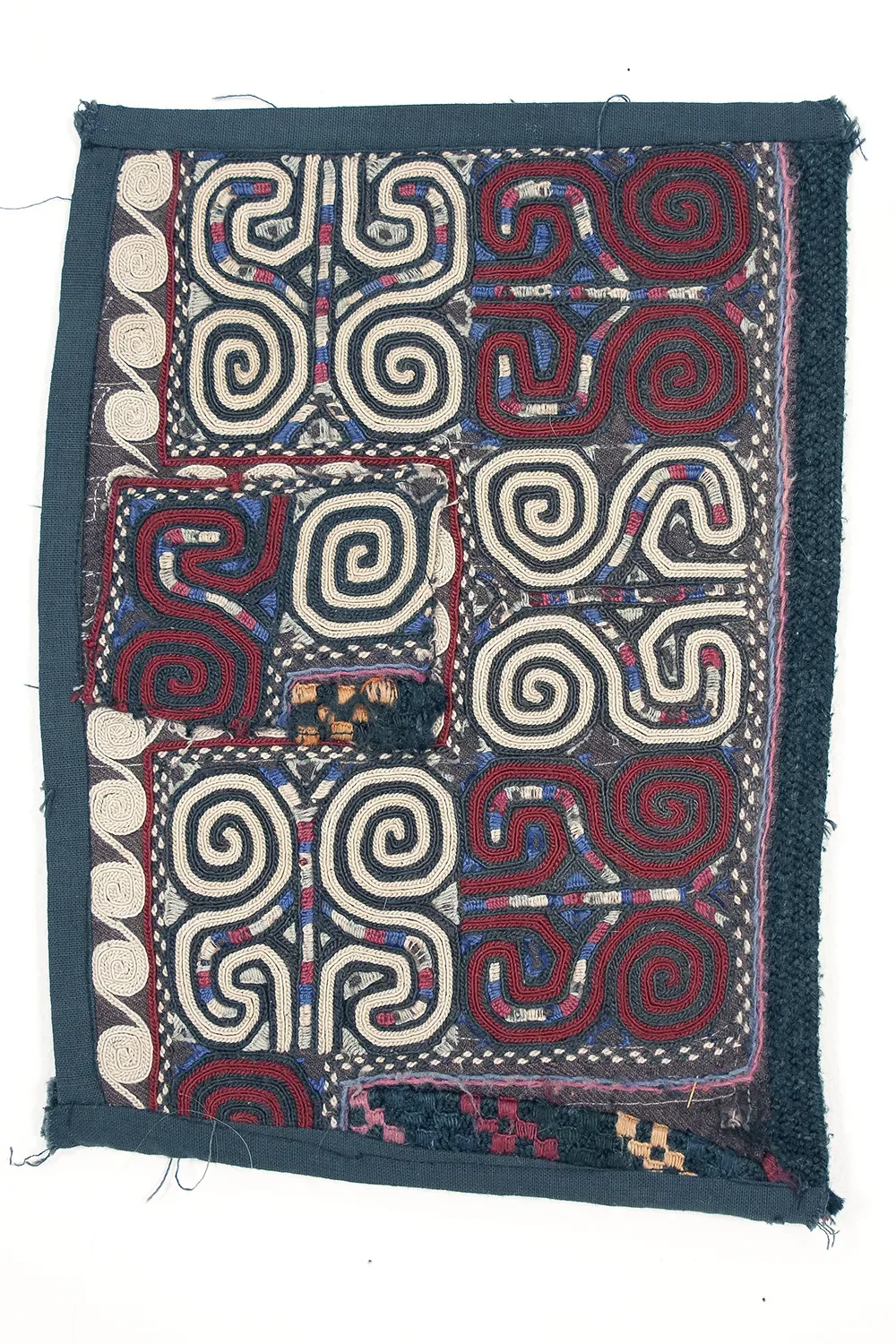
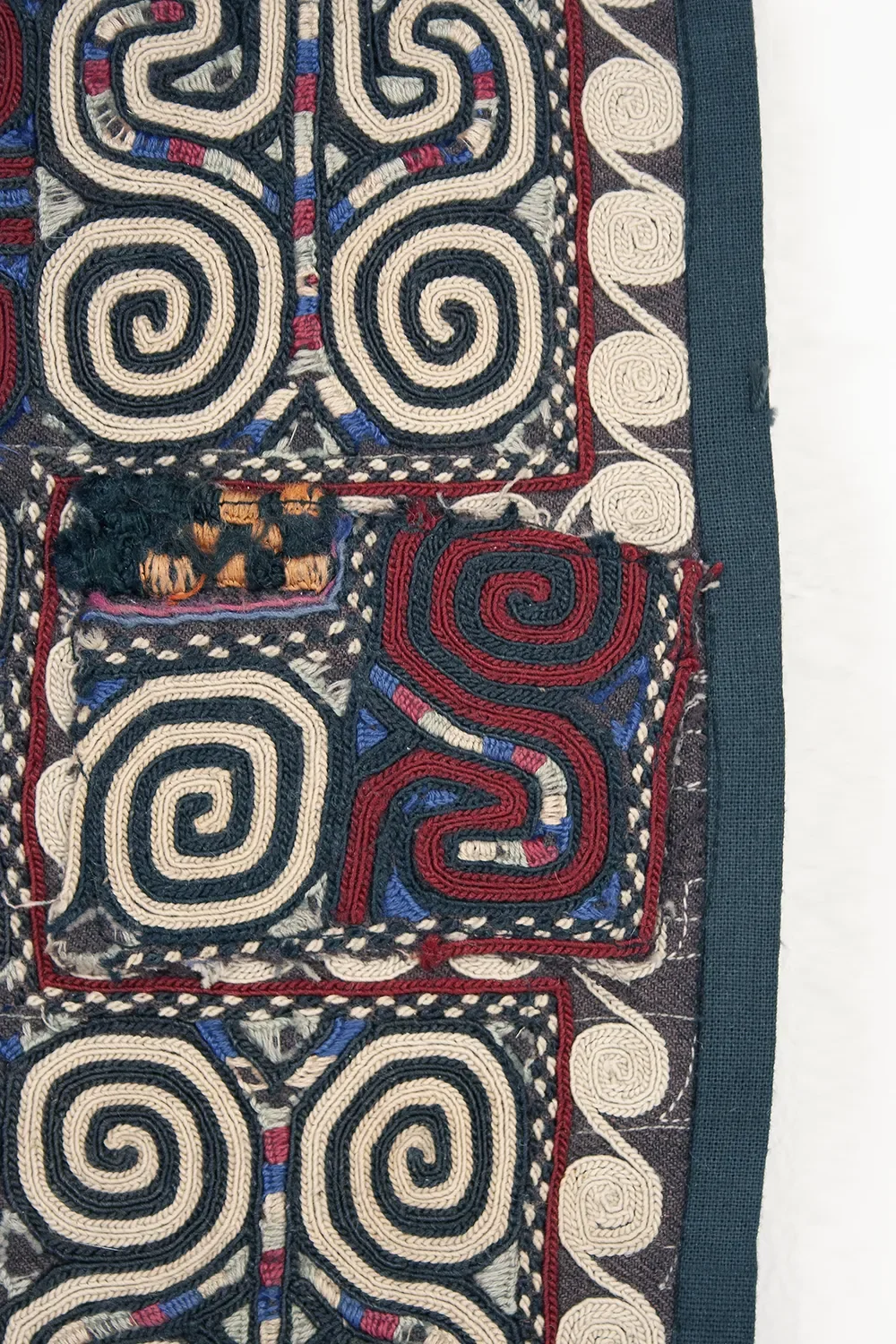
Reverse appliqué and embroidered textile
Although purchased in Istanbul, this piece is most likely a Hmong (Miao) textile from the highlands of Southeast Asia, possibly northern Vietnam, Laos, or southern China. The combination of reverse appliqué, raised couched spirals, and indigo patchwork is characteristic of high-quality Hmong/Miao needlework. Turkey has long had dealers specializing in ethnographic textiles from Central and Southeast Asia. During the 1980s–2000s many Hmong and Miao textiles entered international markets through antique dealers in Istanbul.
-
The dimensions of this piece indicate this was almost certainly part of a larger garment or baby carrier, not an independent textile. It is most likely a baby carrier panel, where highly decorative embroidery protected and celebrated the child. Baby carriers often contain the finest embroidery a family produced.
The panel is built from multiple pieces of dark indigo cotton joined together. Heavy raised cords create the striking spiral motifs. The asymmetry of the patchwork is intentional and typical of Hmong aesthetics.
The repeated spiral motifs are one of the best clues to its origin. Among Hmong and Miao groups spirals are often interpreted as ancestral or cosmological symbols or references to life's cyclical journey. Different villages assign different meanings, so there is no single universal interpretation.
Title: Textile Panel
Date: 1992
Geography: Turkey
Medium: Handwoven textile, probably hemp, with indigo-dyed fabric, appliqué and hand-couched embroidery in red, blue, cream and black threads.
Dimensions: H. 9.5 in. W. 7 in.
Provenance: Purchased in Istanbul, Turkey
Inventory Number: TU.01